PhysBrain 1.5 Unifies Perception, Action, and Prediction
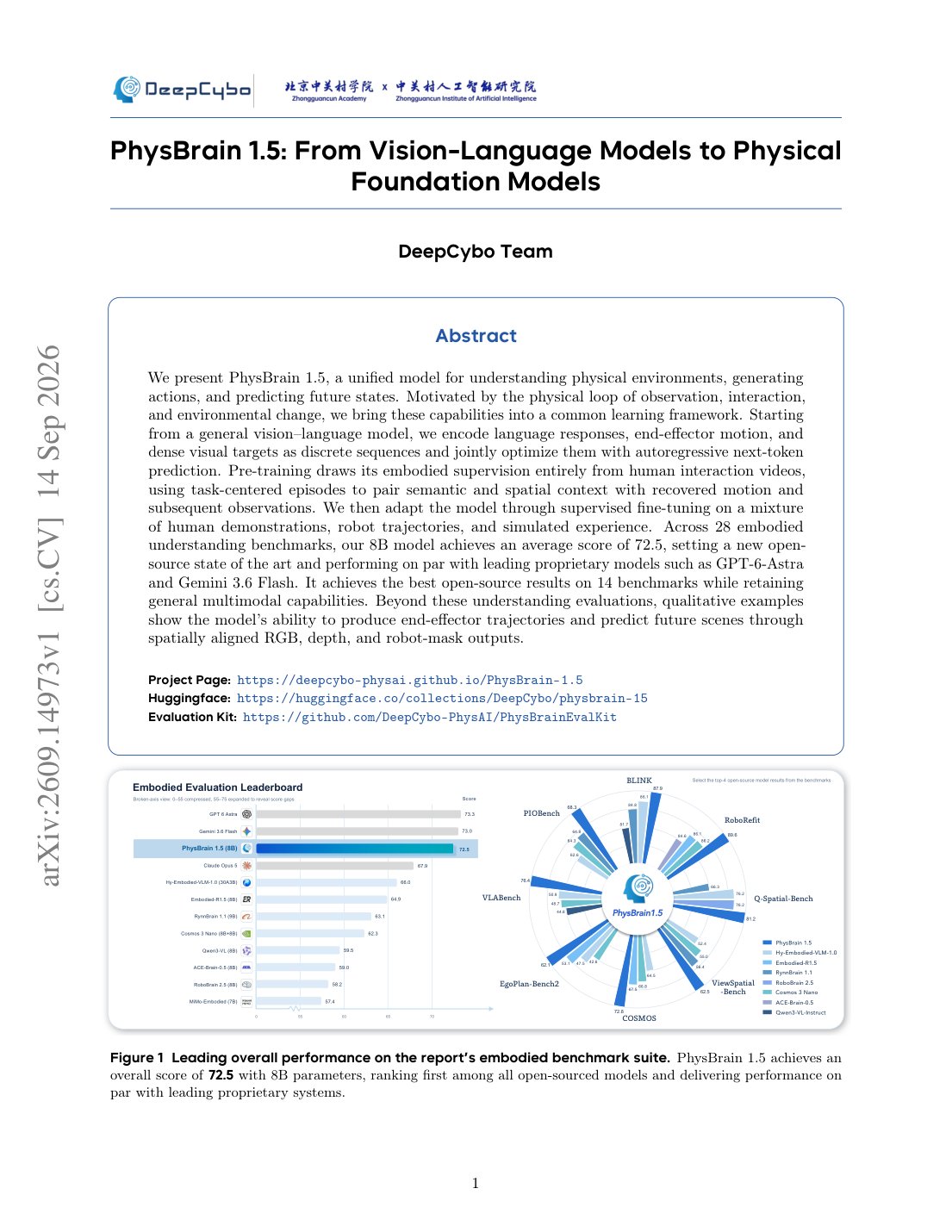
An 8B autoregressive model turns language, end-effector motion, and visual targets into one token stream, reaching a 72.5 average across 28 embodied benchmarks.
Sep 27, 20264 min2609.14973
Autonomous systems, robot learning, motion planning, and manipulation.
An 8B autoregressive model turns language, end-effector motion, and visual targets into one token stream, reaching a 72.5 average across 28 embodied benchmarks.
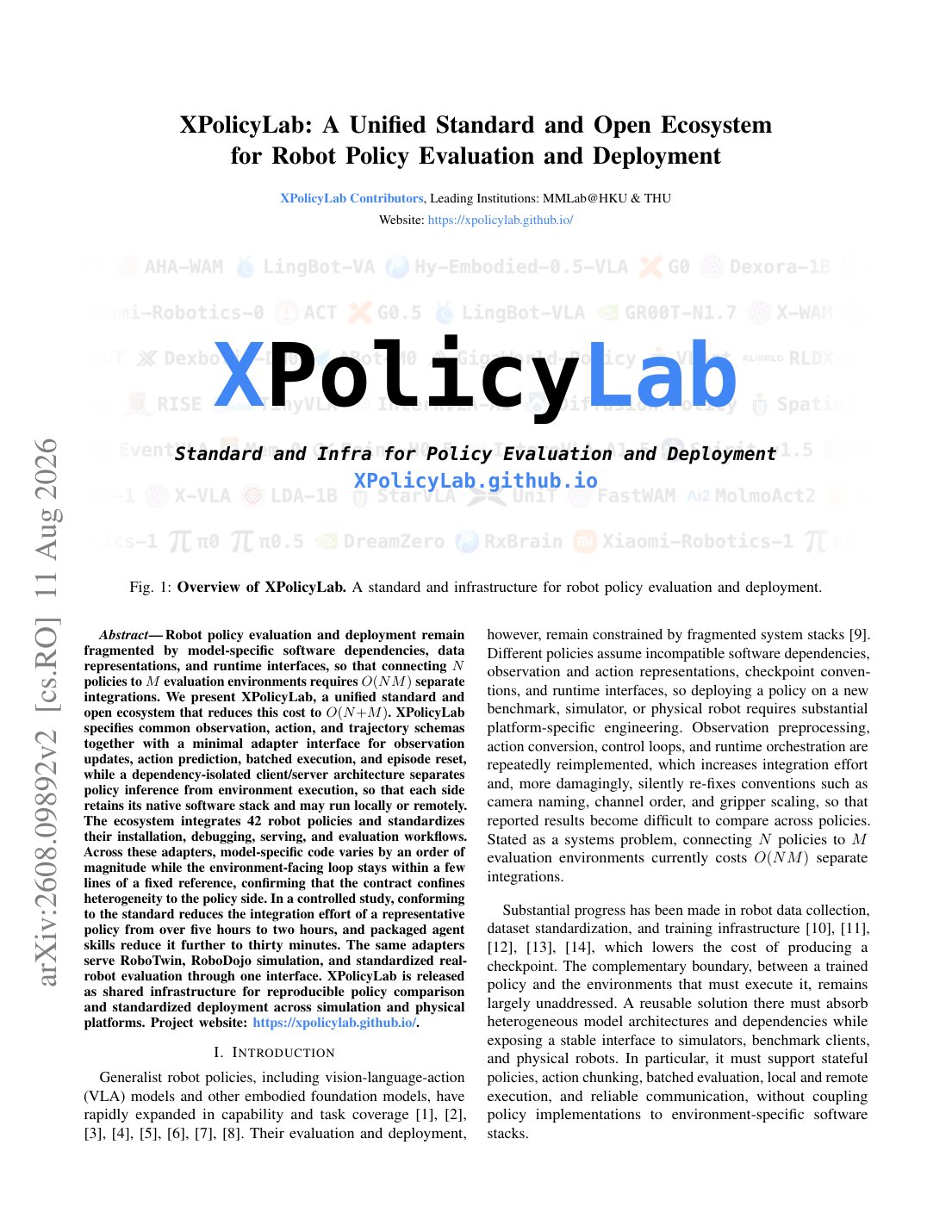
A shared policy contract and isolated client/server runtime let 42 robot policies connect to simulations and real-robot evaluation without pairwise adapters.
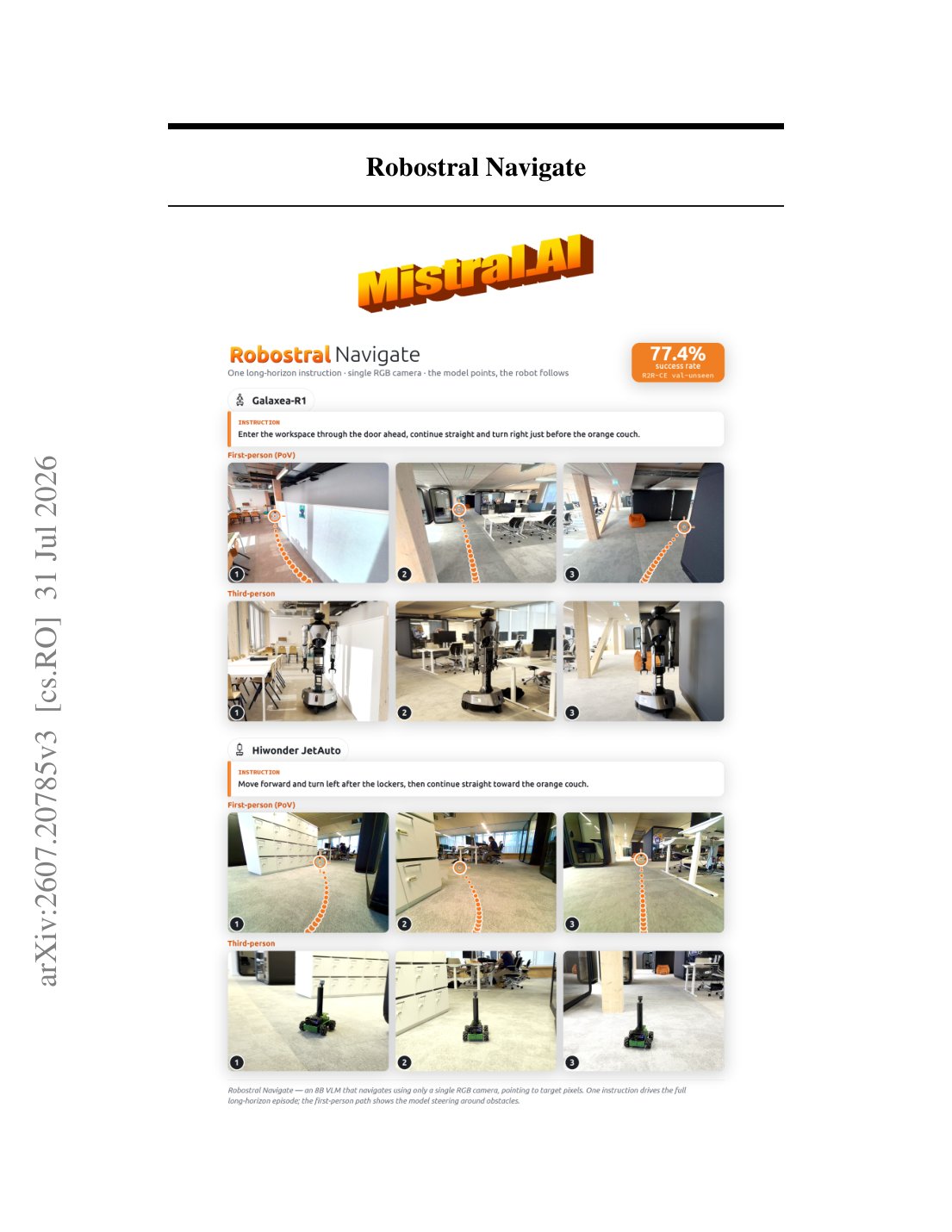
An 8B vision-language model predicts image-space waypoints from a single RGB stream, reaching 77.4% unseen-environment success while cutting supervised training tokens 22×.
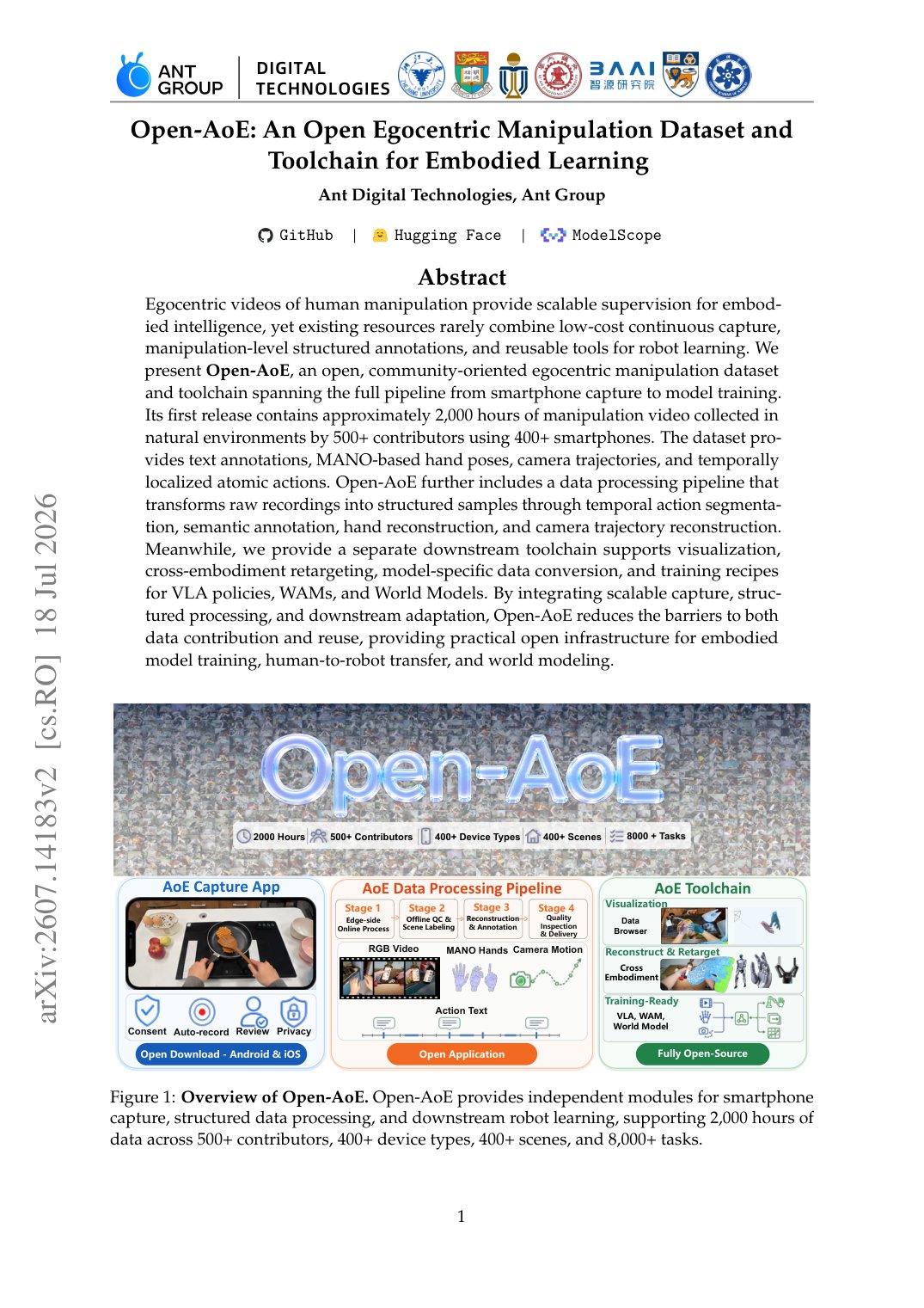
Smartphone capture and a modular processing toolchain turn 2,000 hours of human manipulation video into structured supervision for embodied models.
A Cosmos-derived causal diffusion model uses simulator state, action cues, and a streaming KV cache to render 704×1280 rollouts at 68–105 FPS.
Explicit reasoning and pixel-goal anchors decouple cognition from control, raising POI arrival to 77.3% with a reported 35.0% gain.
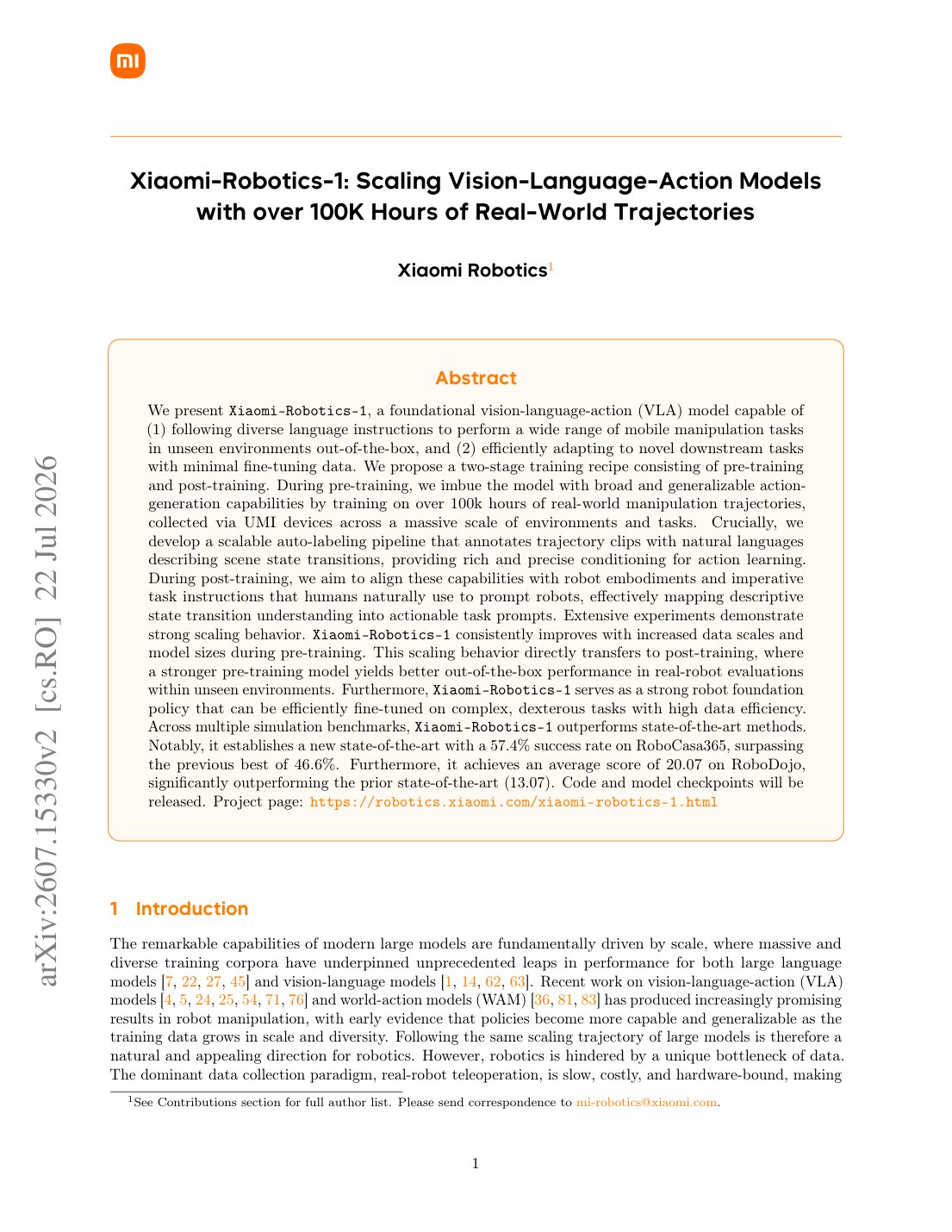
A two-stage VLA recipe combines 100K hours of UMI trajectories with cross-embodiment post-training, reaching 57.4% on RoboCasa365.
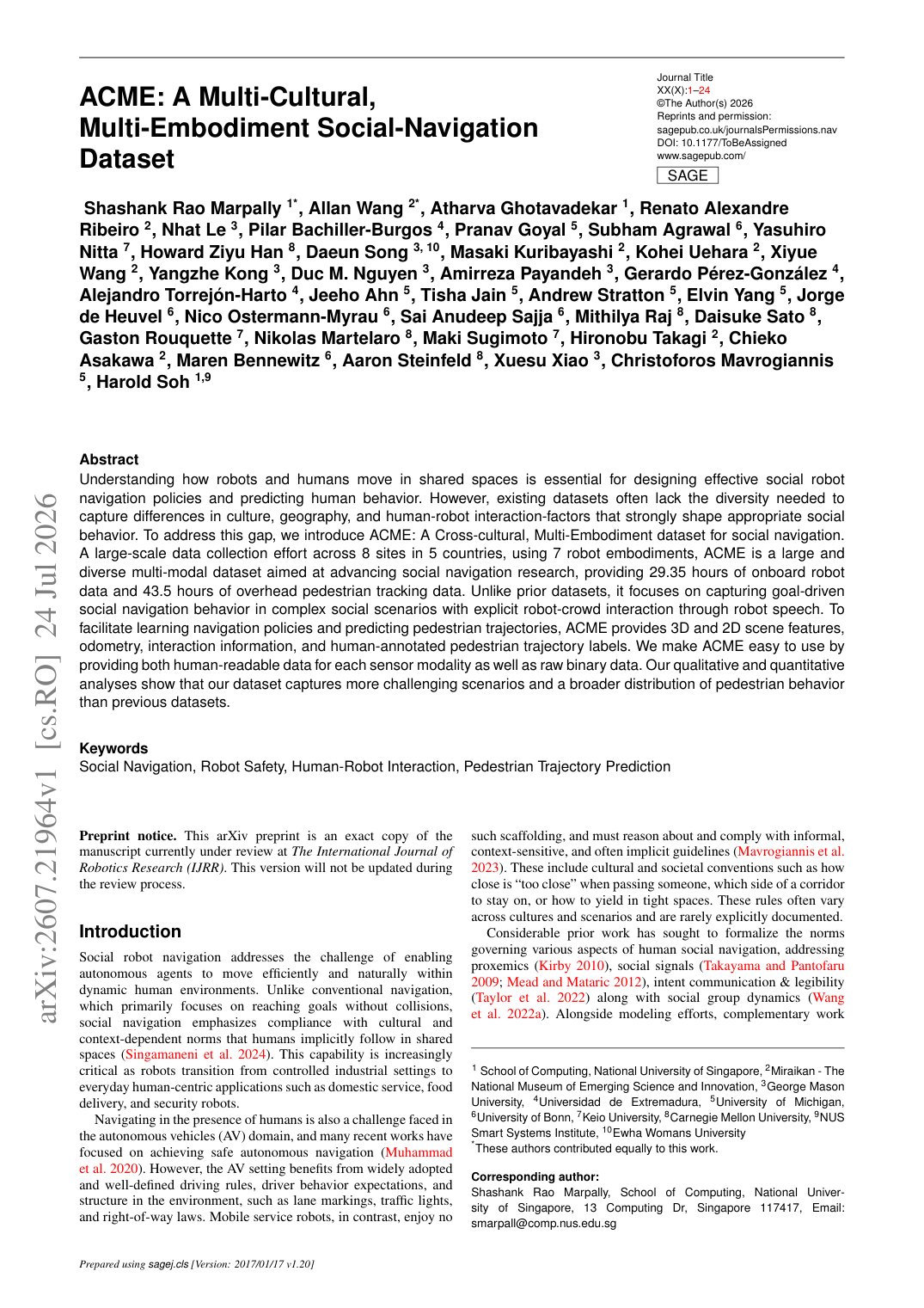
Eight sites across five countries and seven robot embodiments add 72.1K verified trajectories for testing navigation and prediction under varied crowds.
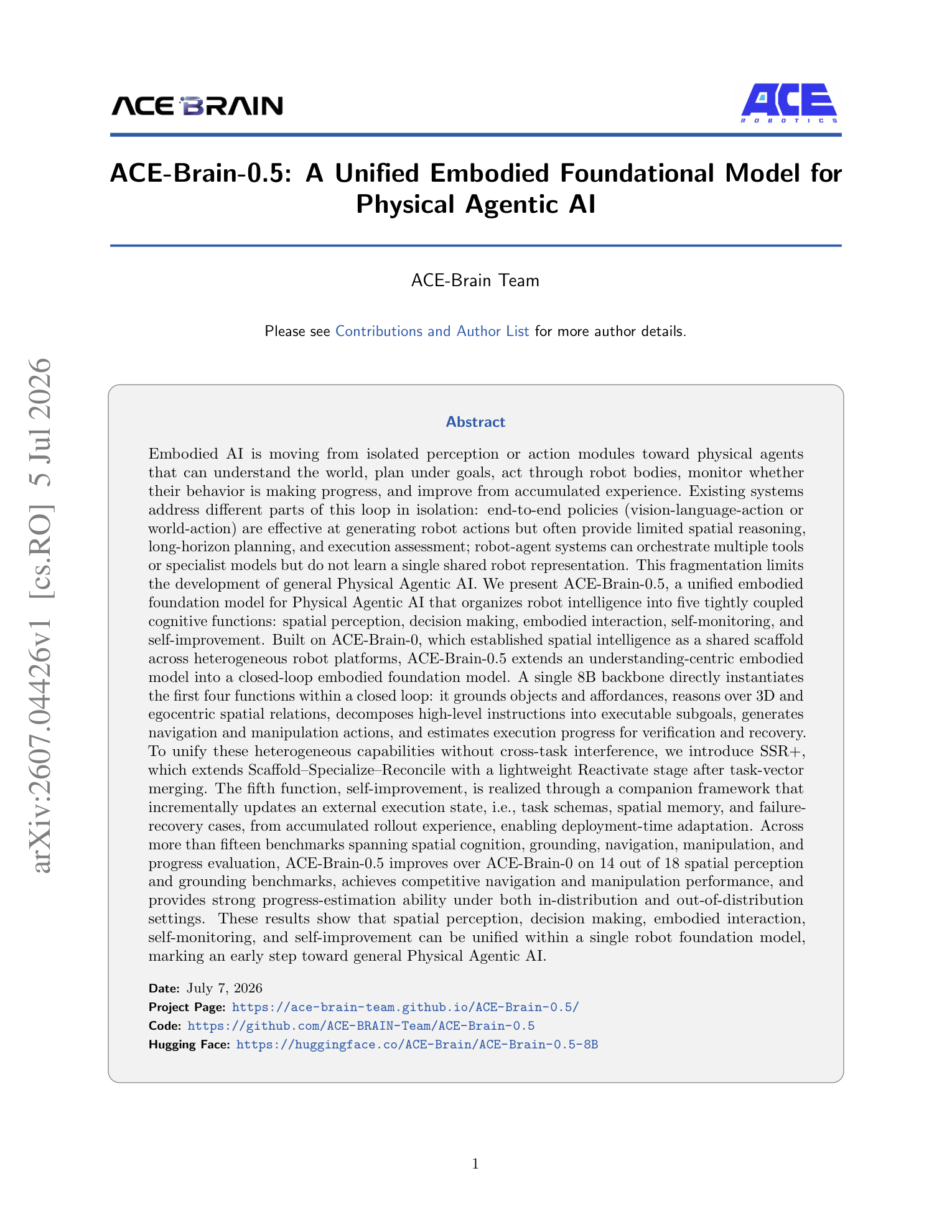
An 8B backbone couples perception, planning, action, and progress estimation, improving 14 of 18 spatial benchmarks over ACE-Brain-0.
A benchmark of VLA models across 18 tasks reveals strong object generalization but weak force control and long-horizon planning.