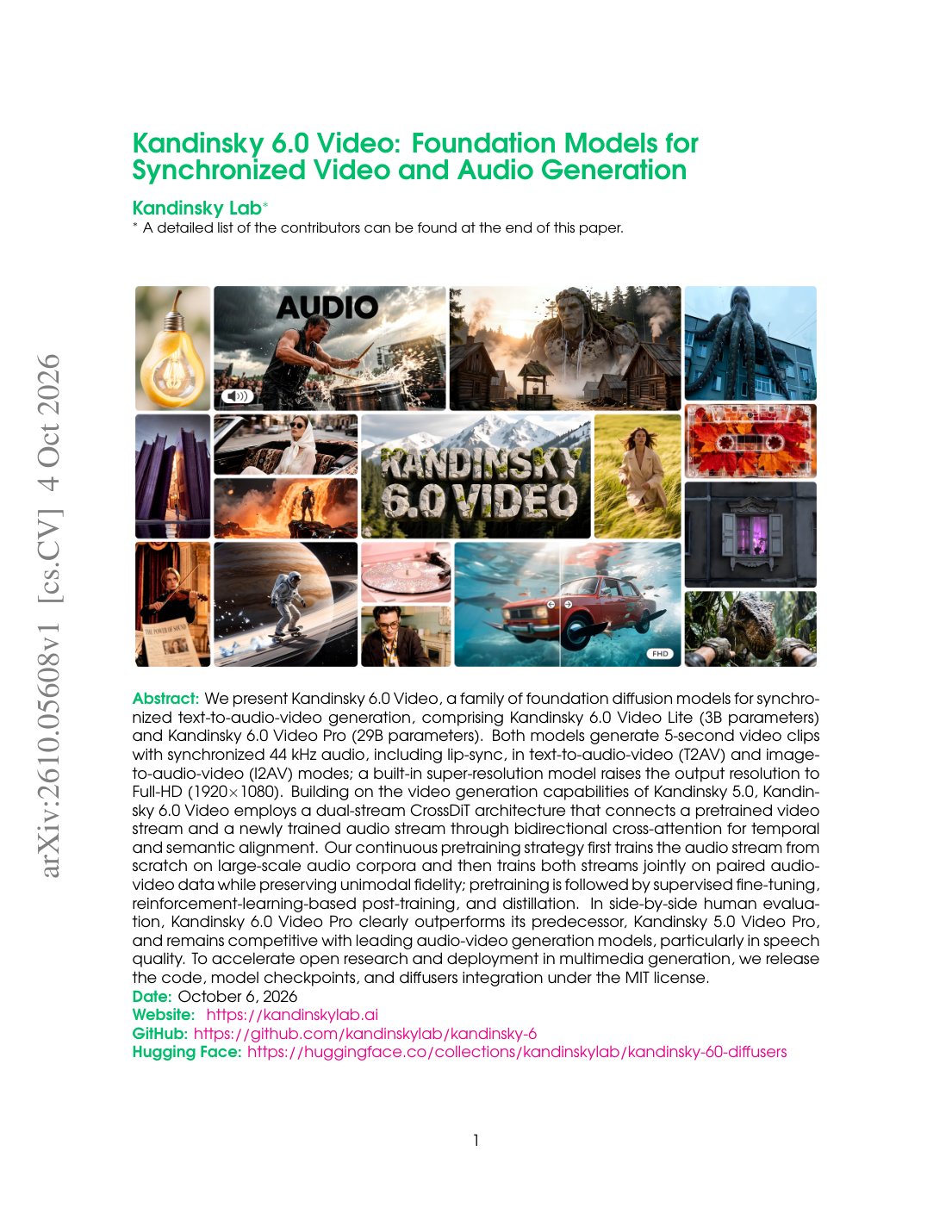
Kandinsky 6.0 Improves Its Predecessor’s Synchronized Video
A bidirectional dual-stream diffusion transformer couples a pretrained video model with a new audio stream to generate five-second clips with 44 kHz sound.
Oct 8, 20265 min2610.05608
Image processing, computer vision, pattern recognition, and scene understanding.
A bidirectional dual-stream diffusion transformer couples a pretrained video model with a new audio stream to generate five-second clips with 44 kHz sound.
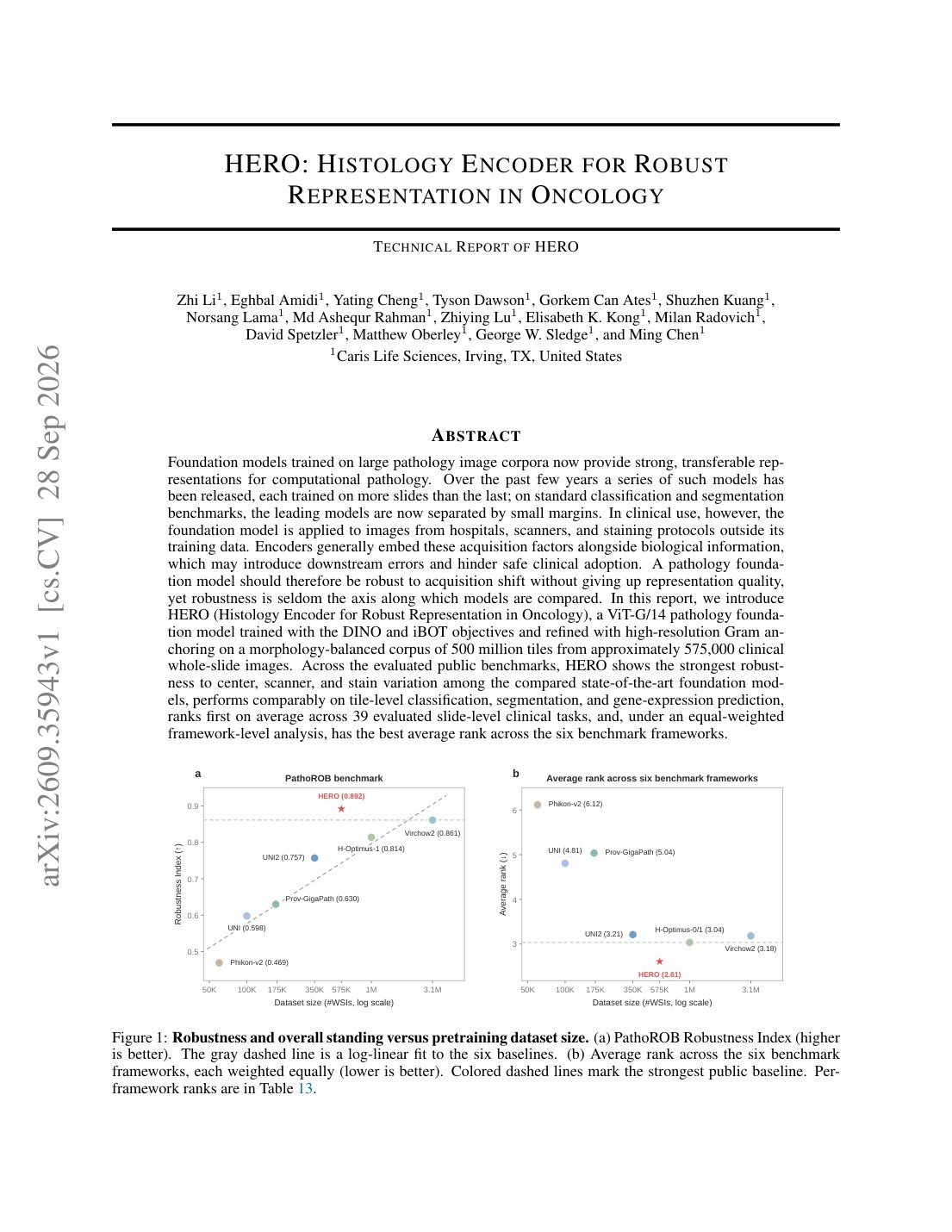
A ViT-G/14 pathology encoder combines DINO and iBOT pretraining with high-resolution Gram anchoring, targeting reliable representations across center, scanner, and stain variation.
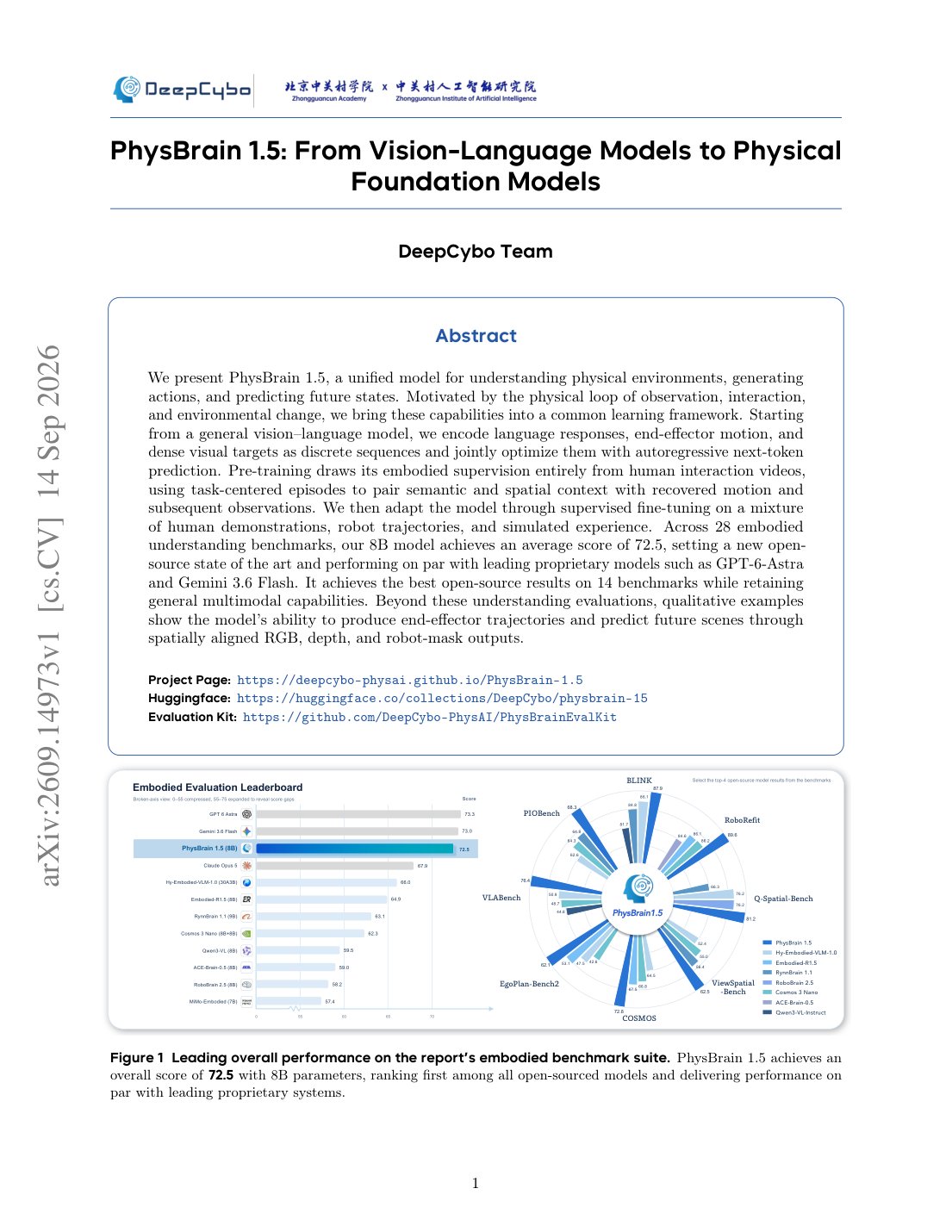
An 8B autoregressive model turns language, end-effector motion, and visual targets into one token stream, reaching a 72.5 average across 28 embodied benchmarks.
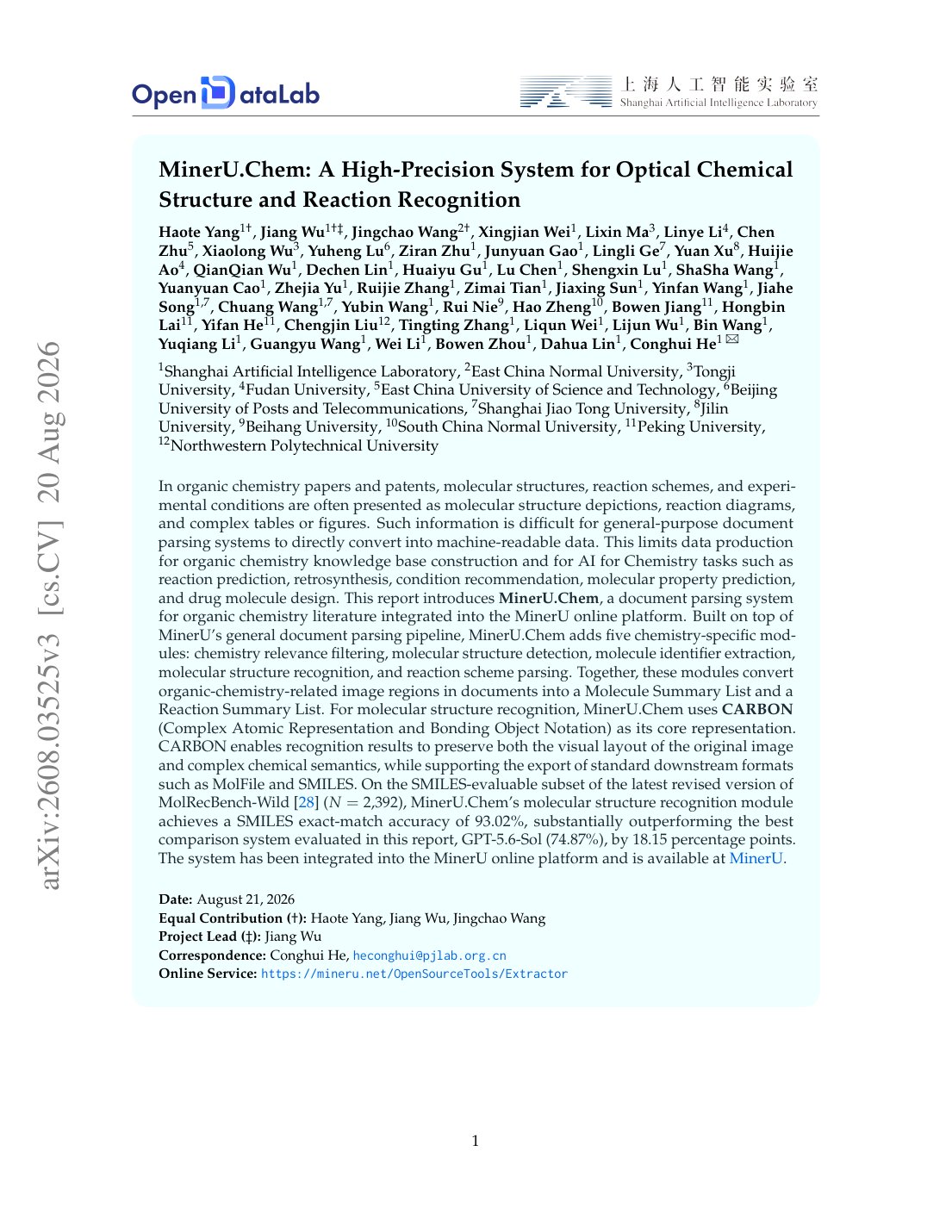
A chemistry-focused extension to MinerU converts document regions into molecule and reaction records, outperforming the evaluated GPT-5.6-Sol comparison on a SMILES benchmark subset.
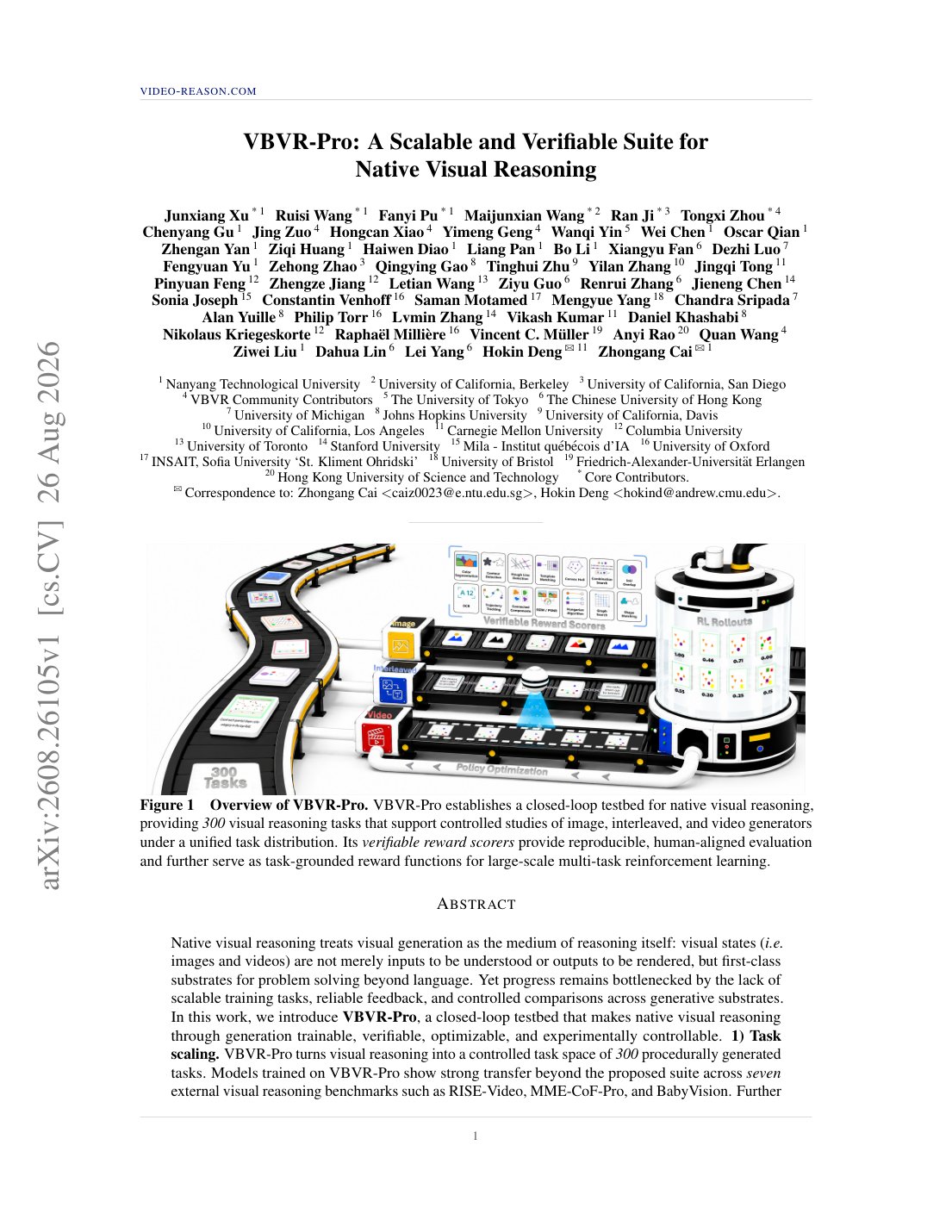
A 300-task procedural suite replaces preference-only judging with task-specific scorers, raising matched reinforcement-learning performance from 0.509 to 0.548.
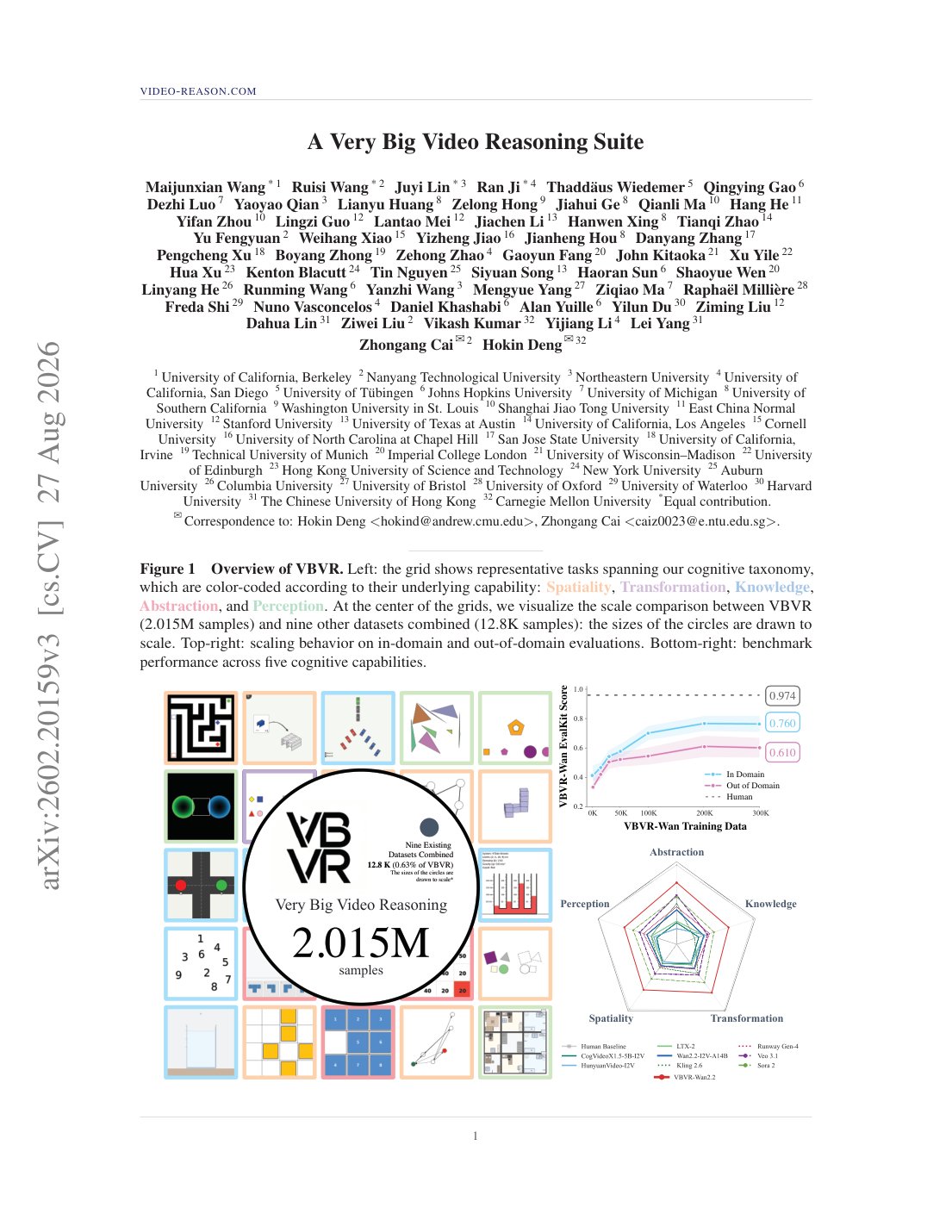
VBVR pairs 200 curated reasoning tasks with rule-based, human-aligned evaluation to study whether video models generalize across spatiotemporal reasoning problems.
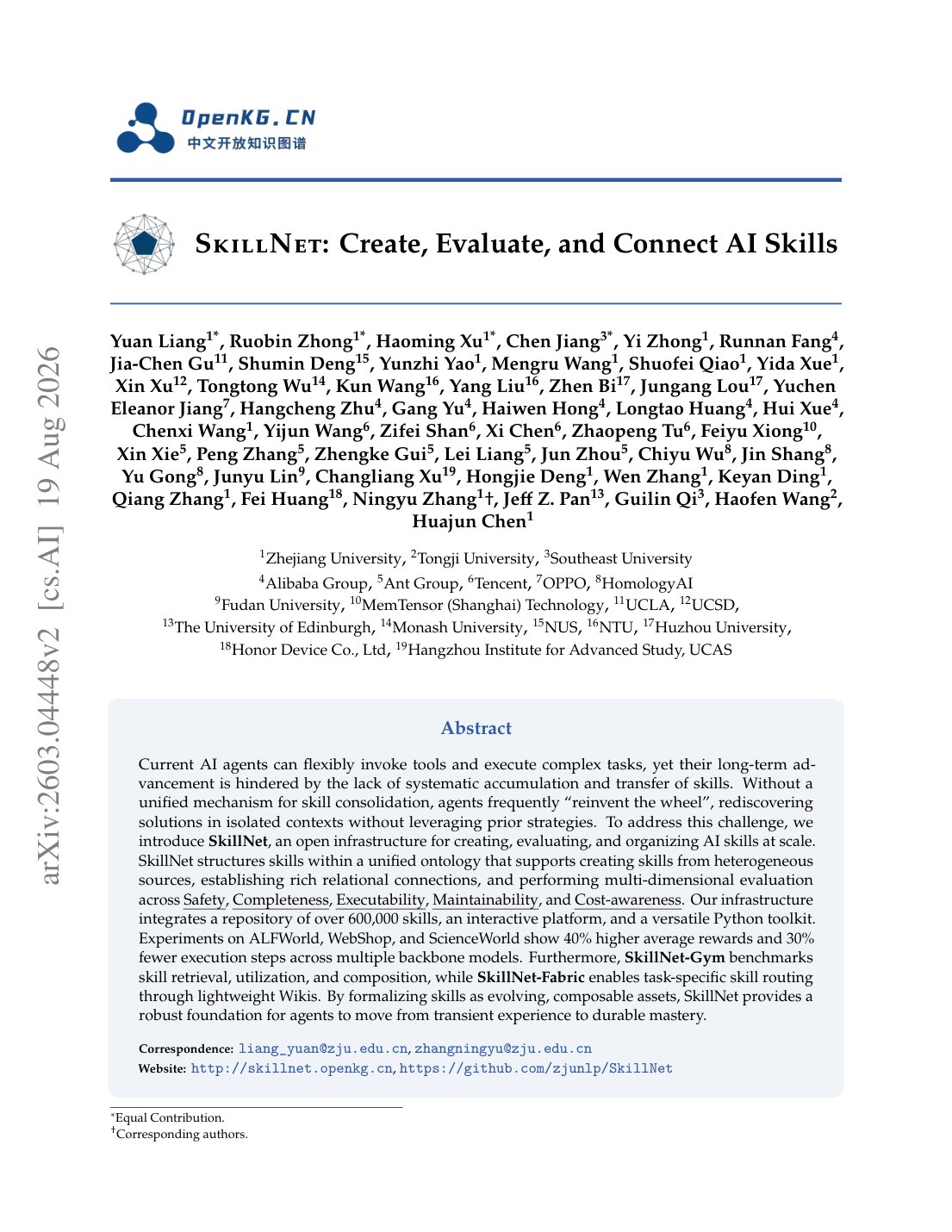
An ontology, evaluation scheme, and 600,000-skill repository let agents retrieve and compose prior procedures, reporting 40% higher rewards with 30% fewer steps.
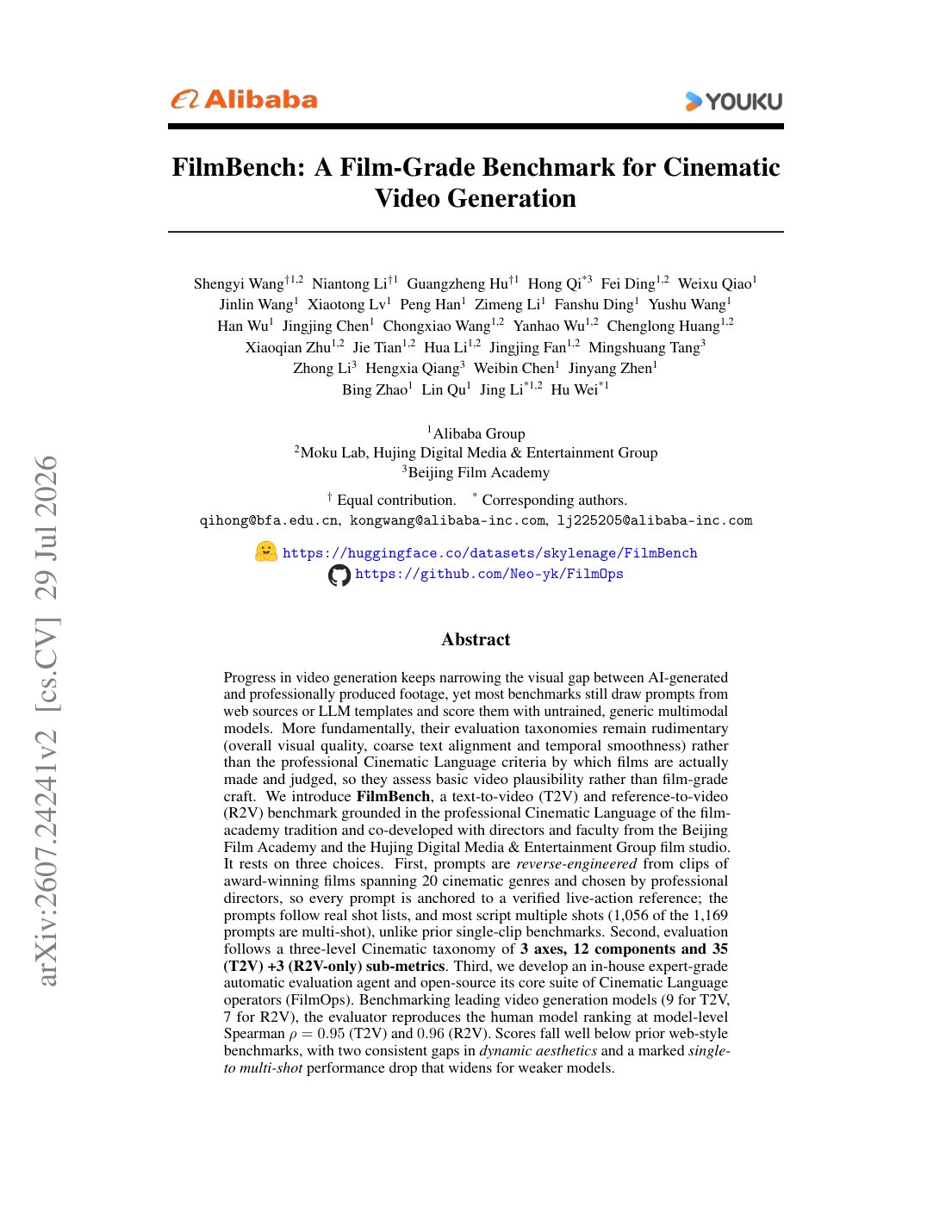
A director-designed taxonomy and evaluation agent track human model rankings at Spearman ρ=0.95–0.96 while exposing multi-shot and dynamic-aesthetics failures.
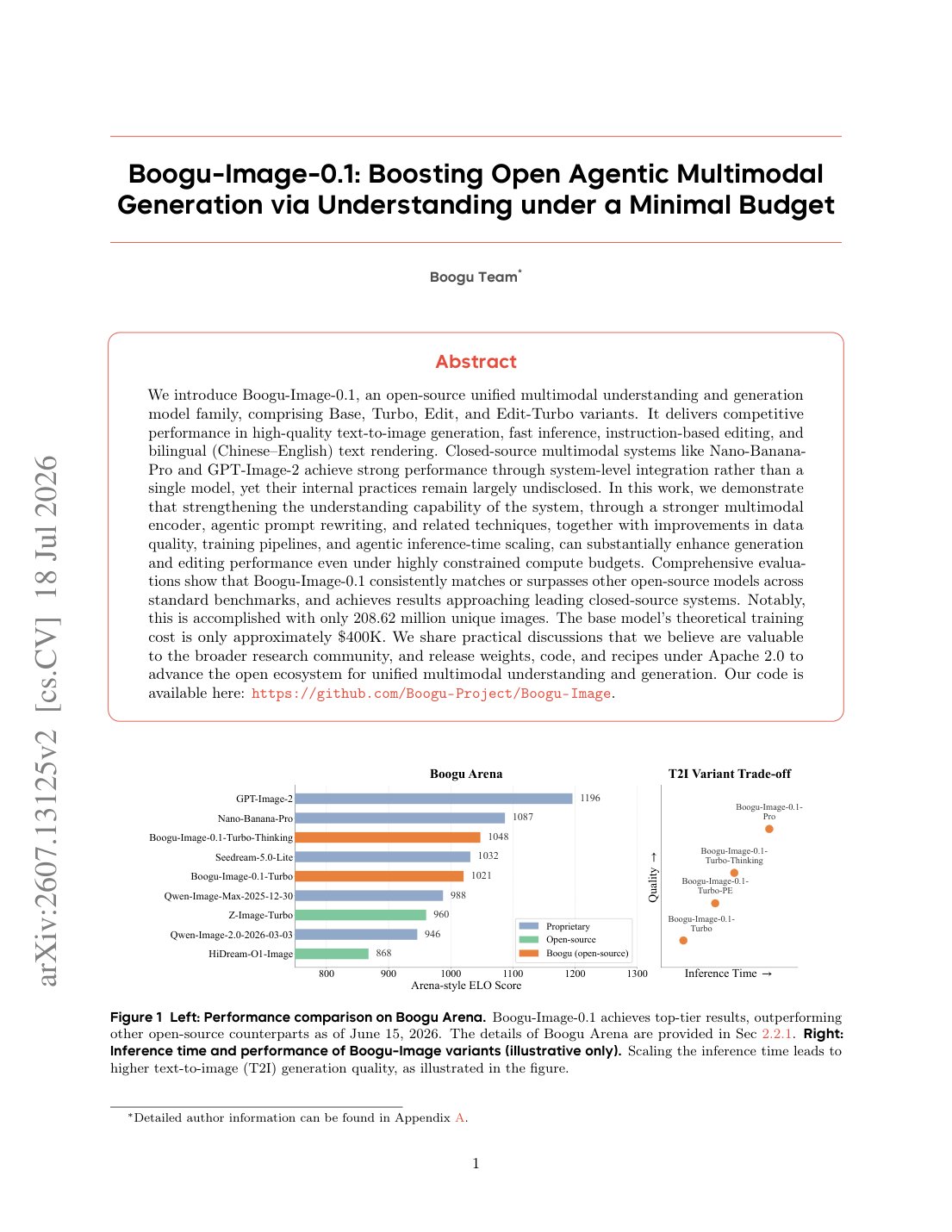
Boogu-Image-0.1 combines a stronger multimodal encoder, agentic prompt rewriting, and curated data to train competitive generation and editing models for about $400K.
Smartphone capture and a modular processing toolchain turn 2,000 hours of human manipulation video into structured supervision for embodied models.