SkillNet Cuts Agent Steps Through Reusable Skills
An ontology, evaluation scheme, and 600,000-skill repository let agents retrieve and compose prior procedures, reporting 40% higher rewards with 30% fewer steps.
Underlying Paper
SkillNet: Create, Evaluate, and Connect AI Skills
Current AI agents can flexibly invoke tools and execute complex tasks, yet their long-term advancement is hindered by the lack of systematic accumulation and transfer of skills. Without a unified mechanism for skill consolidation, agents frequently ``reinvent the wheel'', rediscovering solutions in isolated contexts without leveraging prior strategies. To address this challenge, we introduce SkillNet, an open infrastructure for creating, evaluating, and organizing AI skills at scale. SkillNet structures skills within a unified ontology that supports creating skills from heterogeneous sources, establishing rich relational connections, and performing multi-dimensional evaluation across Safety, Completeness, Executability, Maintainability, and Cost-awareness. Our infrastructure integrates a repository of over 600,000 skills, an interactive platform, and a versatile Python toolkit. Experiments on ALFWorld, WebShop, and ScienceWorld show 40% higher average rewards and 30% fewer execution steps across multiple backbone models. Furthermore, SkillNet-Gym benchmarks skill retrieval, utilization, and composition, while SkillNet-Fabric enables task-specific skill routing through lightweight Wikis. By formalizing skills as evolving, composable assets, SkillNet provides a robust foundation for agents to move from transient experience to durable mastery.
Tool-using agents can execute multi-step tasks, but their successful procedures usually remain trapped inside a single run or prompt context. The result is repeated rediscovery: an agent must again infer how to navigate a website, interact with an environment, or sequence tools even when an equivalent solution already exists. SkillNet treats those procedures as durable assets rather than transient traces, proposing infrastructure to create, assess, connect, retrieve, and compose AI skills.
Core Contribution
The paper's central contribution is a shared representation and operating layer for skills. Instead of defining a skill merely as a prompt fragment or an isolated tool call, SkillNet organizes it through a three-level ontology: a Skill Taxonomy for functional categories, a Skill Relation Graph for dependencies and semantic associations, and a Skill Package Library for task-oriented bundles. This framing matters because retrieval alone is insufficient when an agent needs a chain of compatible procedures; the relation graph and packages are intended to make prior work composable.
Figure 3 lays out this hierarchy, moving from categories to relations to reusable packages. It makes clear that the project is broader than a benchmark or a prompt library: it is an attempt to standardize the lifecycle of an agent skill.
The authors also define evaluation along Safety, Completeness, Executability, Maintainability, and Cost-awareness. That is a useful distinction from repositories that rank skills only by task success. A procedure can solve a narrow instance while being brittle, expensive, or difficult to revise; SkillNet's evaluation model is designed to expose those properties before a skill is reused.
Technical Approach
SkillNet combines three pieces. First, skills are created from heterogeneous sources and entered into the ontology. Second, they are linked by functional and semantic relations, allowing the system to identify prerequisite or related capabilities. Third, agents retrieve individual skills or packages and use them for a task. The accompanying skillnet-ai package exposes this workflow through both a command-line interface and a Python library, positioning the system as development infrastructure rather than a fixed agent architecture.
The paper adds two extensions around this repository. SkillNet-Gym evaluates retrieval, utilization, and composition, separating the question of finding a relevant procedure from the question of executing it correctly. SkillNet-Fabric uses lightweight Wikis for task-specific routing. Together, these components address an operational gap in agent-memory work: storing past experience is not enough unless agents can select an appropriate unit of reuse and integrate it into a new trajectory.
Results and Analysis
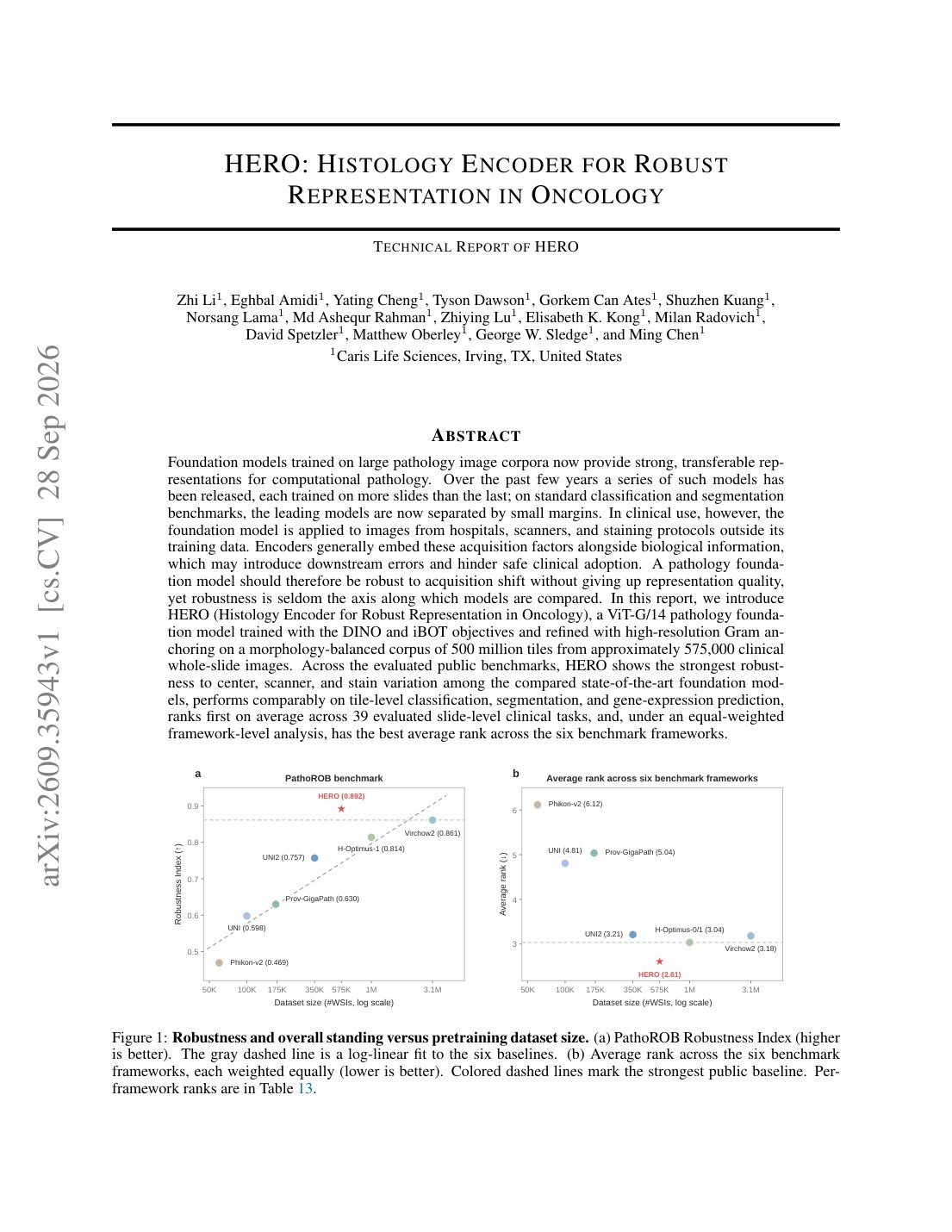
The experimental evidence comes from ALFWorld, WebShop, and ScienceWorld, with comparisons against ReAct and few-shot baselines across multiple backbone models. The paper reports 40% higher average rewards and 30% fewer execution steps. Figure 6 presents the comparison as paired reward and step plots across the three environments; SkillNet is shown above the baselines on average reward and below them on average steps. The two measurements point in the same direction: the system is not merely taking shorter trajectories at the cost of task completion.
The result is consequential for environments where each action is a tool invocation, webpage interaction, or simulator step. Fewer steps can reduce cost and opportunities for compounding errors, while higher reward suggests that the retrieved skills remain useful rather than acting as generic shortcuts. Still, the reported aggregates do not establish that every kind of skill benefits equally. The evidence is strongest for the tested interactive benchmarks and the selected backbone models, not for open-ended production workflows with changing tools, adversarial inputs, or long-lived skill libraries.
The paper's practical contribution is therefore more specific than a claim of general agent mastery. It provides a sizable repository, a formal organization scheme, and evidence that structured reuse can improve benchmark task execution. The 600,000-skill scale makes the indexing and governance questions real, but the paper does not, from the reported benchmark summary, settle how quality control, duplicate skills, or stale procedures behave over extended deployment.
Caveats in Practice
Skill quality remains central to the proposal. Multi-dimensional evaluation supplies a vocabulary for judging it, but benchmark gains alone do not validate the safety or maintainability of a large, evolving repository. The 40% reward and 30% step improvements support the utility of retrieval and composition in ALFWorld, WebShop, and ScienceWorld; they do not by themselves measure transfer to new domains or the cost of maintaining the underlying ontology. For practitioners, SkillNet is most compelling as a reusable-skill layer to test alongside an existing agent stack, with evaluation criteria applied to the local tools and task distributions that matter.
Evidence Box
moderateKey Claims
- •Ontology-based skill organization enables reusable and composable agent procedures
- •Multi-dimensional skill evaluation can assess safety, executability, maintainability, completeness, and cost-awareness
- •Retrieved skills improve agent performance over ReAct and few-shot prompting
Key Results
- •40% higher average rewards across ALFWorld, WebShop, and ScienceWorld
- •30% fewer execution steps across the evaluated interactive environments
- •Repository contains over 600,000 skills
- •Comparisons span 3 benchmark environments against ReAct and few-shot baselines
Limitations & Caveats
- •Evaluation is limited to ALFWorld, WebShop, and ScienceWorld interactive benchmarks
- •Reported aggregate gains do not isolate performance by skill type or relation category
- •No reported evidence here for long-term ontology maintenance, duplicate handling, or stale skills
- •Safety and maintainability criteria are proposed, but benchmark reward and step counts do not directly validate them