Whole-Study MIL Improves Prenatal CHD Screening
Masked-autoencoder pre-training, disease-robust cardiac-frame gating, and transformer pooling produce study-level CHD predictions without clinician-selected frames.
Oct 10, 20264 min2609.31376
Signal processing, systems and control, audio and image processing.
Masked-autoencoder pre-training, disease-robust cardiac-frame gating, and transformer pooling produce study-level CHD predictions without clinician-selected frames.
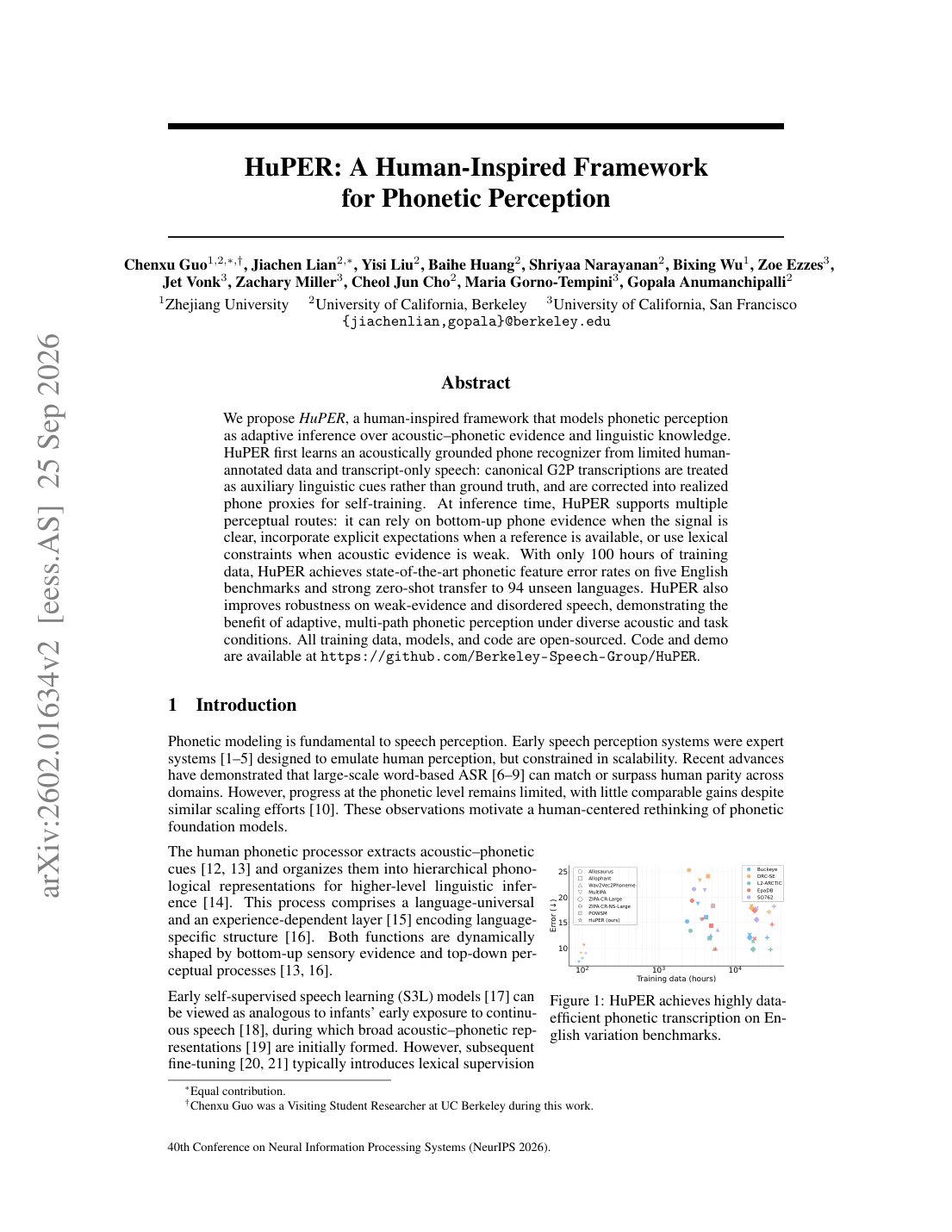
A human-inspired framework combines acoustic evidence with linguistic knowledge, reporting state-of-the-art phonetic error rates from 100 hours of training data and zero-shot results in 95 unseen languages.
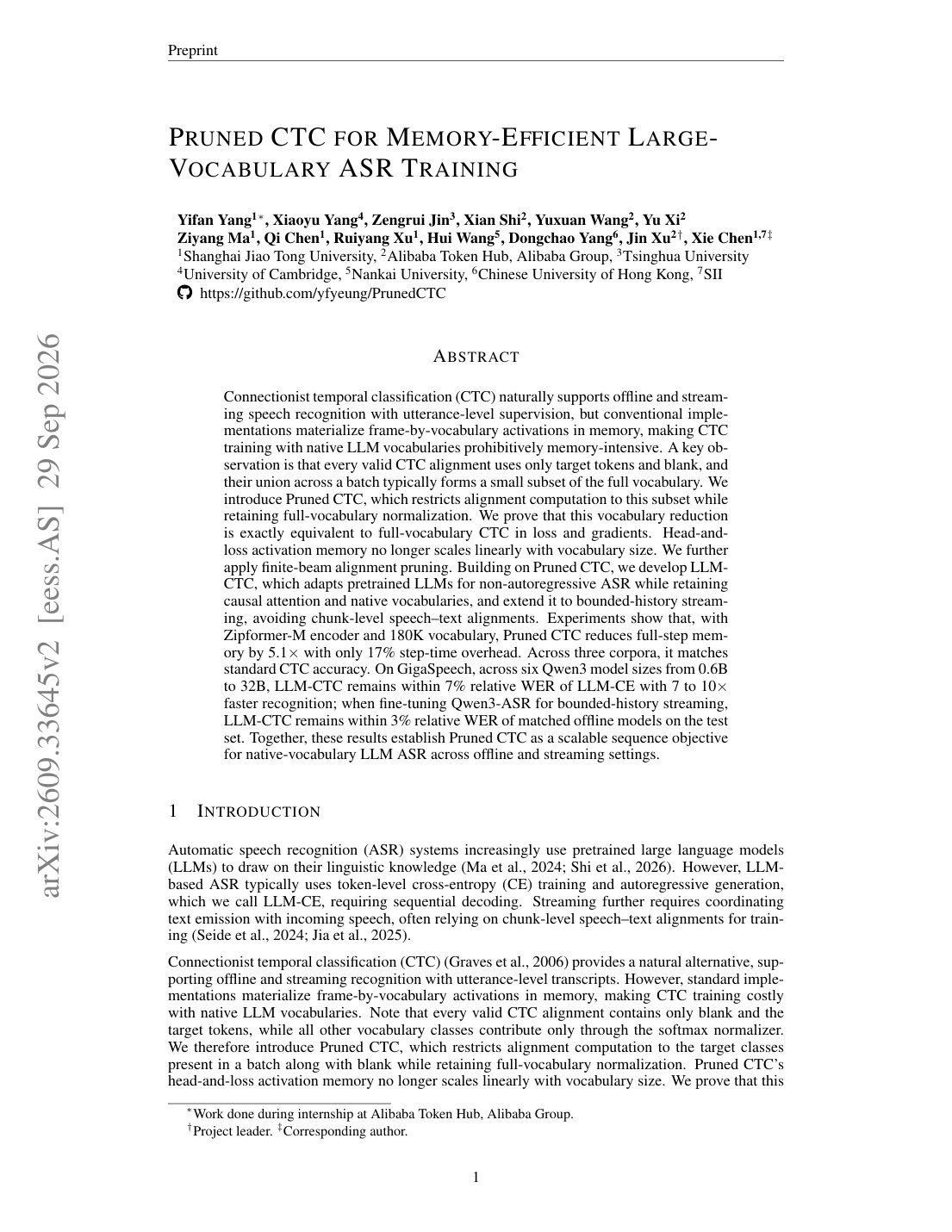
Restricting CTC alignment states to batch target tokens preserves full-vocabulary loss and gradients while cutting full-step memory 5.1× at 180K tokens.
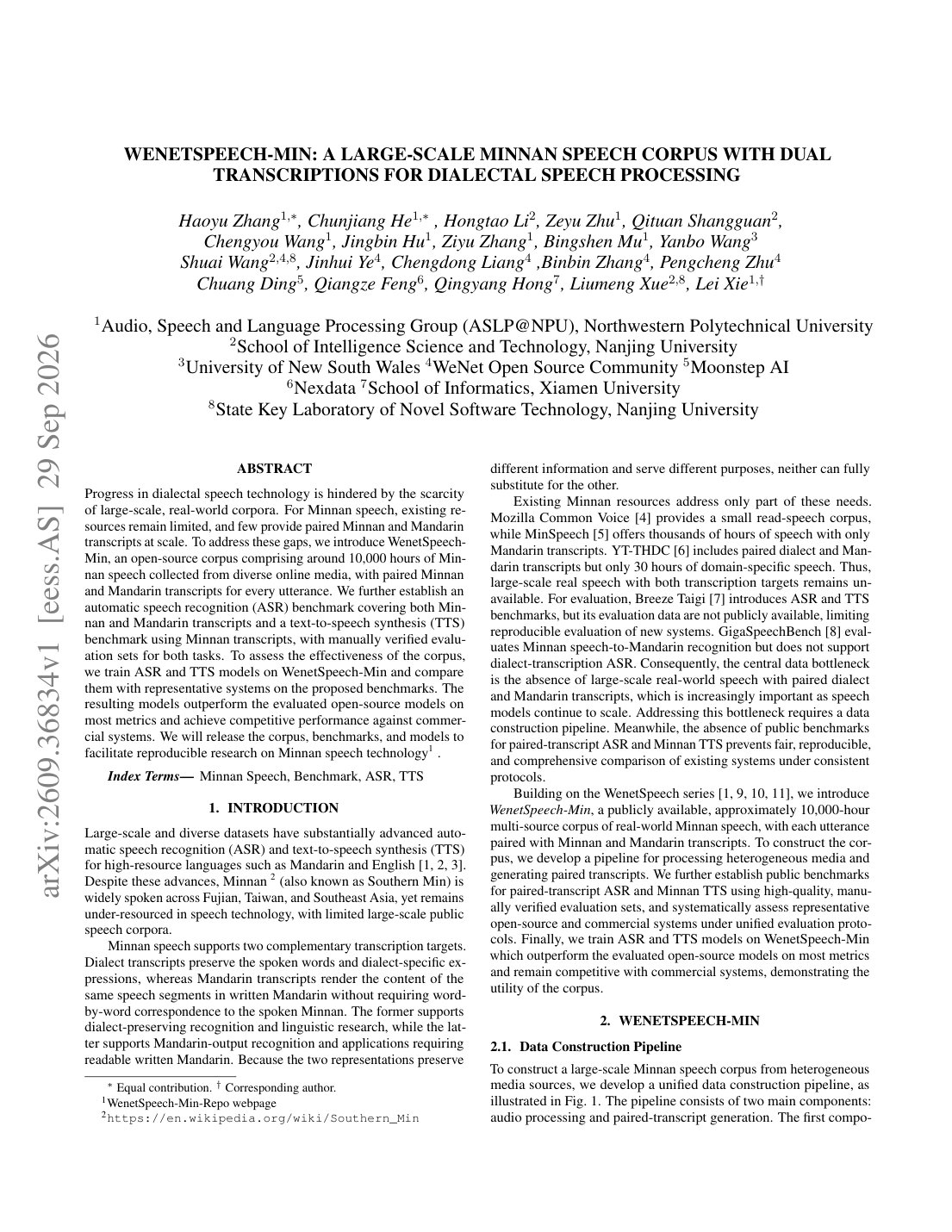
WenetSpeech-Min pairs Minnan and Mandarin text for around 10,000 hours of online speech, creating shared training and evaluation material for ASR and TTS.
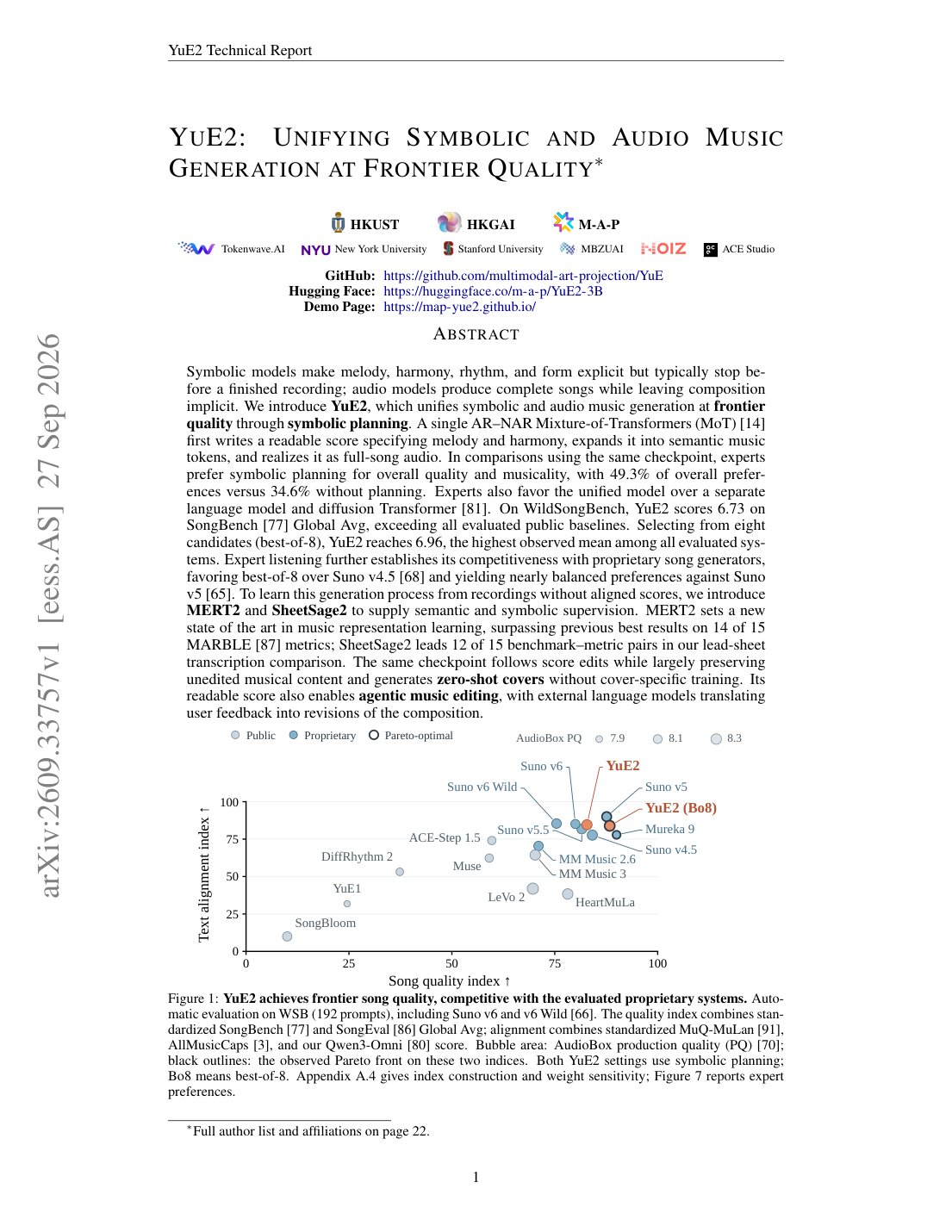
A shared autoregressive–non-autoregressive model writes lead sheets before audio tokens, raising expert overall-quality preferences to 49.3% versus 34.6% without planning.
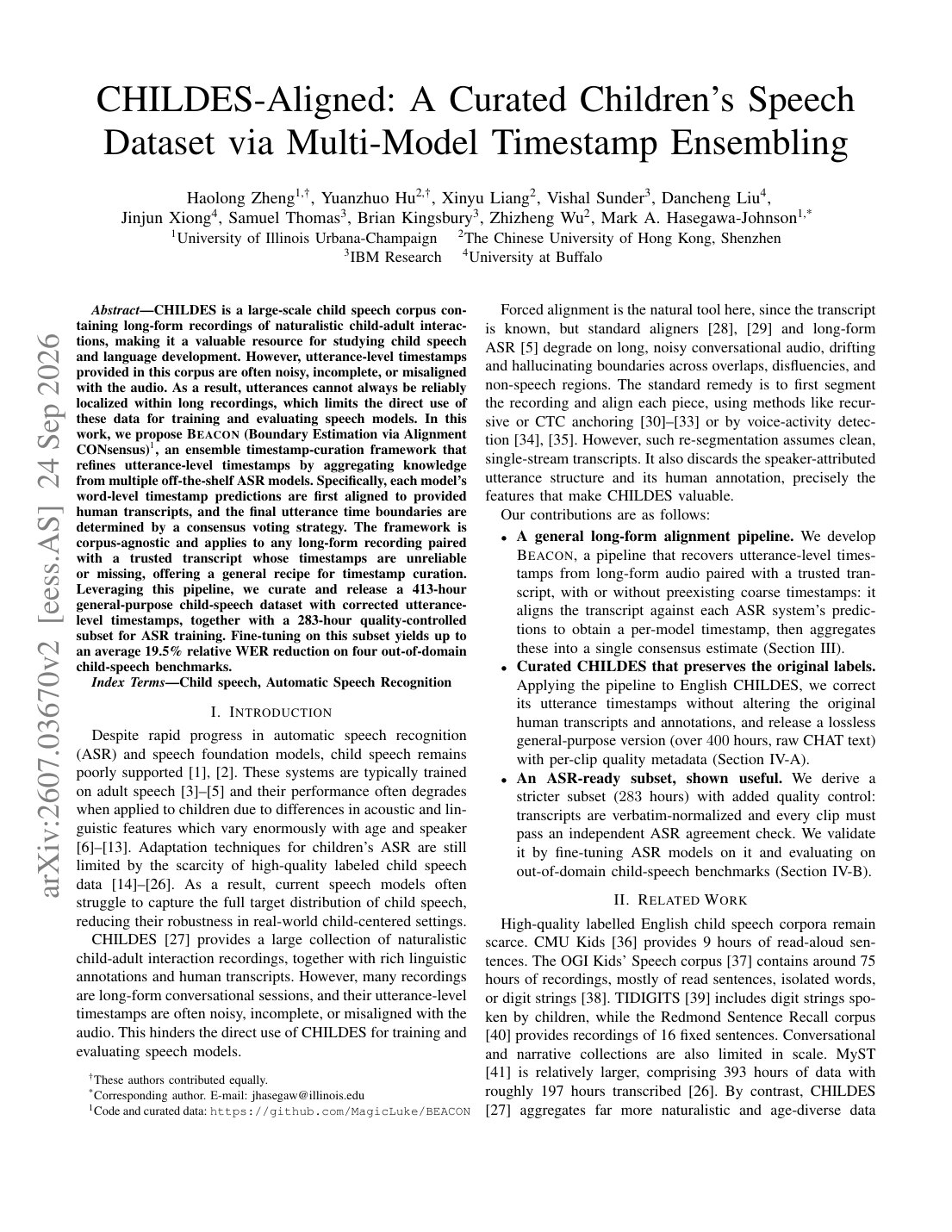
BEACON ensembles word timestamps from off-the-shelf ASR systems to curate 413 hours of CHILDES audio, reducing average out-of-domain WER by up to 19.5%.
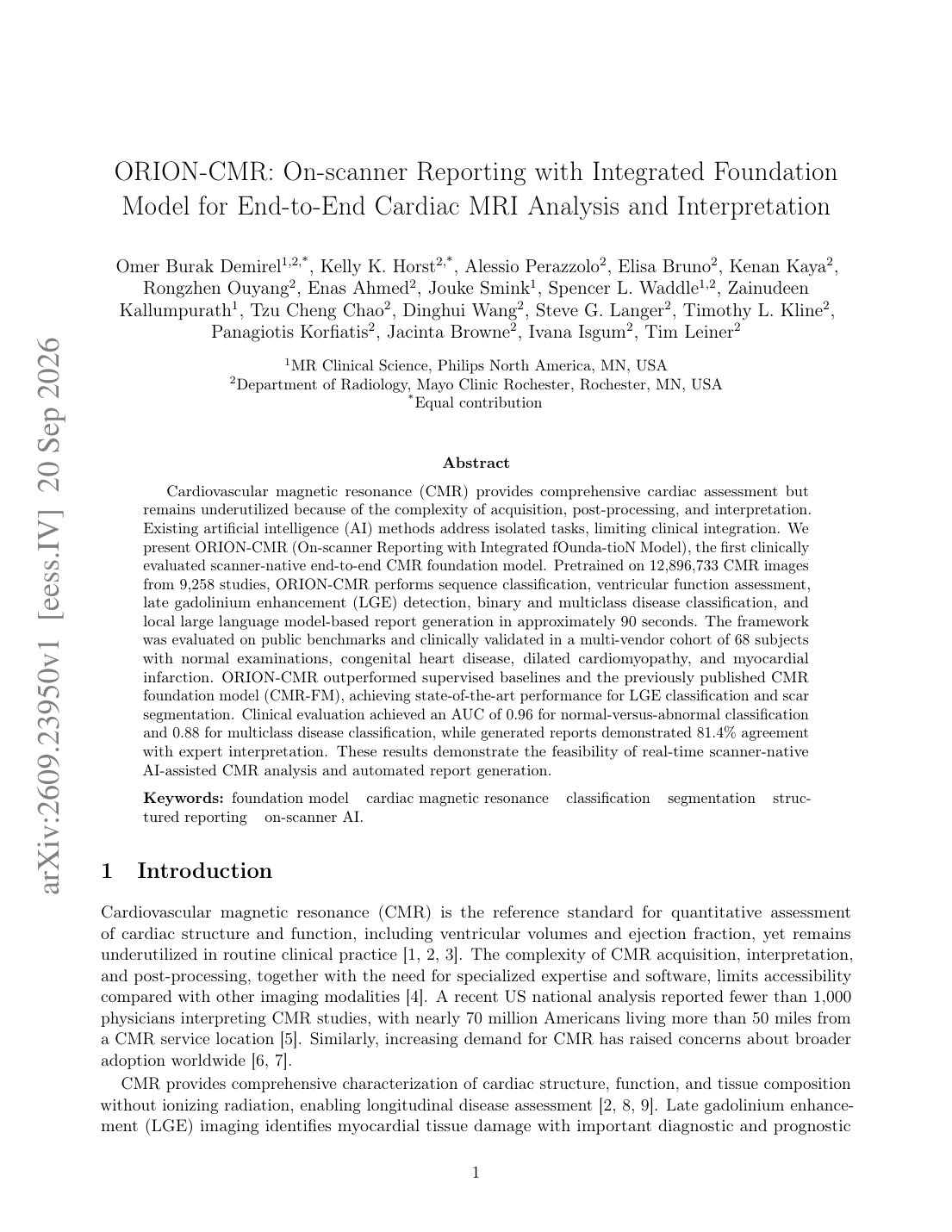
A pretrained CMR foundation model combines image analysis with local language-model reporting, reaching 81.4% expert agreement across a 68-subject clinical cohort.
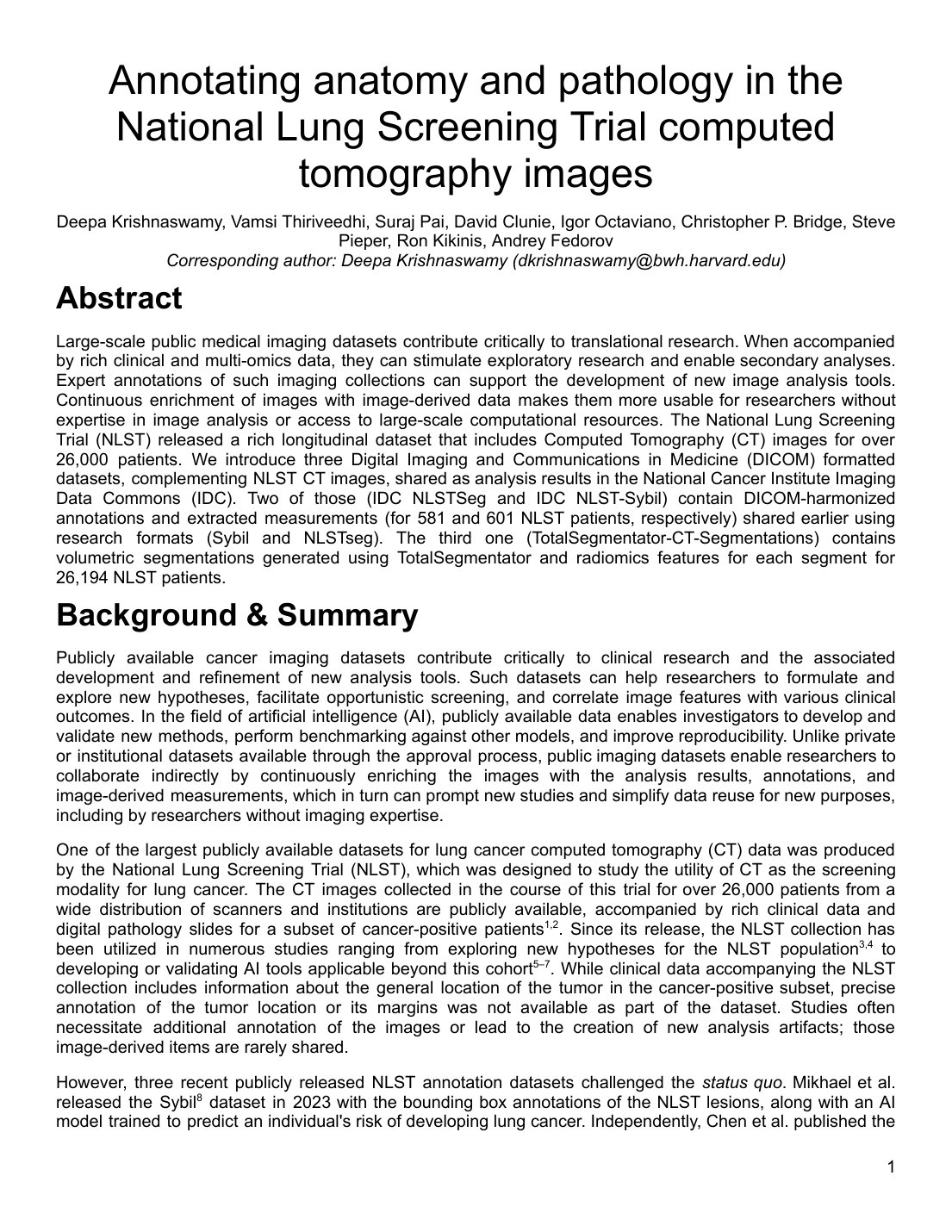
Three IDC analysis-result datasets combine standardized DICOM segmentations, measurements, and viewers, making NLST-derived annotations queryable without local image-processing infrastructure.
An ABC notation plan edited by a text LLM raises SongBench’s mean score from 6.6438 to 6.7220 before token-level audio rendering.
An anatomy-change-aware 2.5D model uses bidirectional slice memory and uncertainty-guided review to cut reader contouring time by 75–80% in a 17-oncologist study.