Consensus Alignment Improves Child-Speech ASR Training Data
BEACON ensembles word timestamps from off-the-shelf ASR systems to curate 413 hours of CHILDES audio, reducing average out-of-domain WER by up to 19.5%.
Sep 26, 20264 min2607.03670
Theory, algorithms, and applications of signal and data analysis.
BEACON ensembles word timestamps from off-the-shelf ASR systems to curate 413 hours of CHILDES audio, reducing average out-of-domain WER by up to 19.5%.
ChaRT learns masked beam structure from 18.2 billion operational observations, then transfers a single frozen backbone to planning and low-label prediction tasks.
A self-injection-locked 220 GHz autodyne radar forms an intermediate-frequency comb, pairing sub-millimeter separation with 3.4 μm measured ranging accuracy.
A Lego-like 3×4-tile metasurface, guided by a digital twin, redirects 28 GHz links and supports a two-user mmWave demonstration without extra power.
EEG-JEPA predicts multi-depth target representations over structured electrode–time masks, lifting frozen 14-task balanced accuracy from 40.49% to 52.94%.
ECG-guided cross-modal pretraining lets a smartwatch PPG model estimate heart age alone, linking a one-standard-deviation gap increase to 1.72-fold higher hypertension odds.
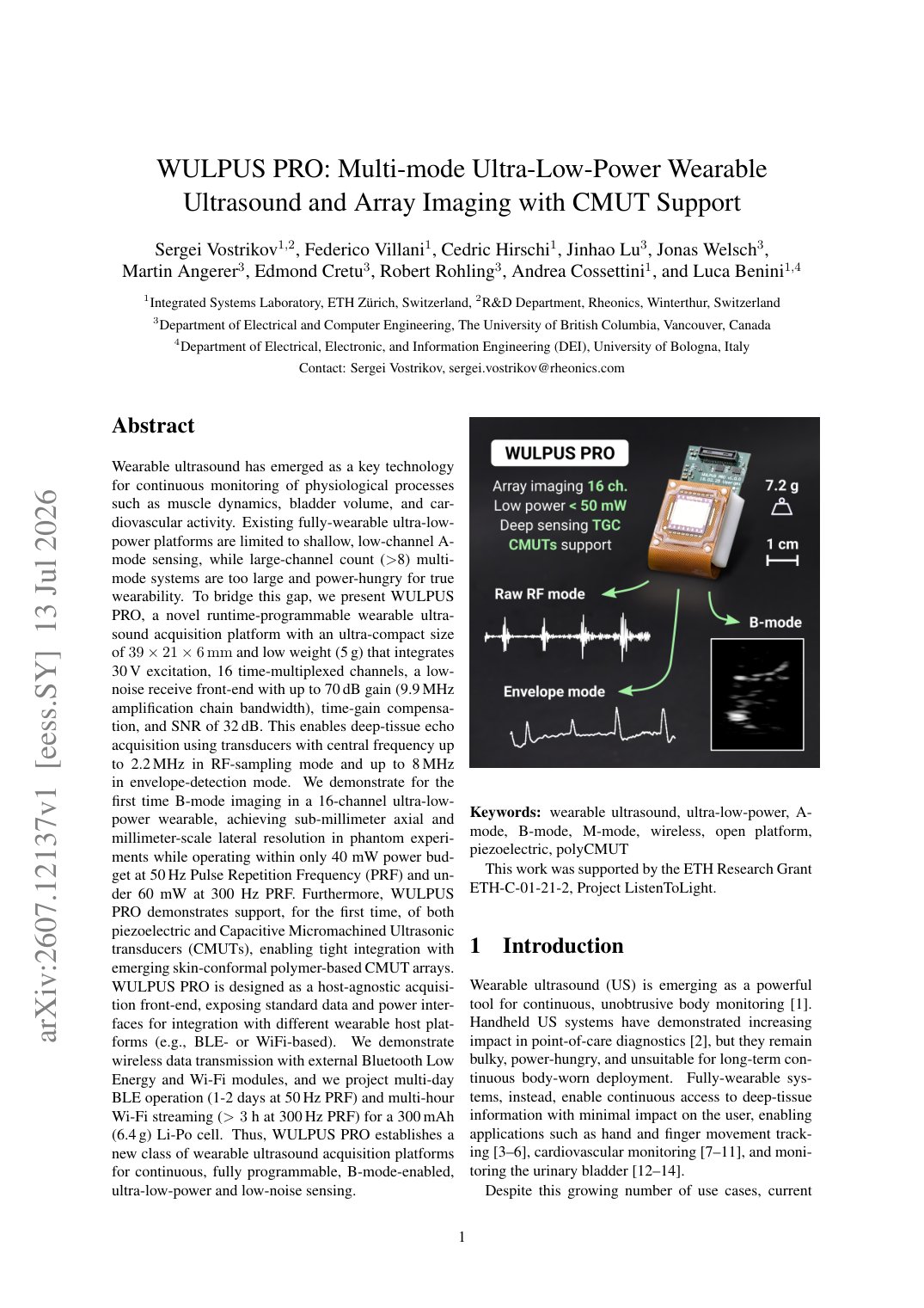
WULPUS PRO combines 16 multiplexed channels, programmable excitation, and host-agnostic wireless interfaces in a 5 g module consuming under 60 mW.
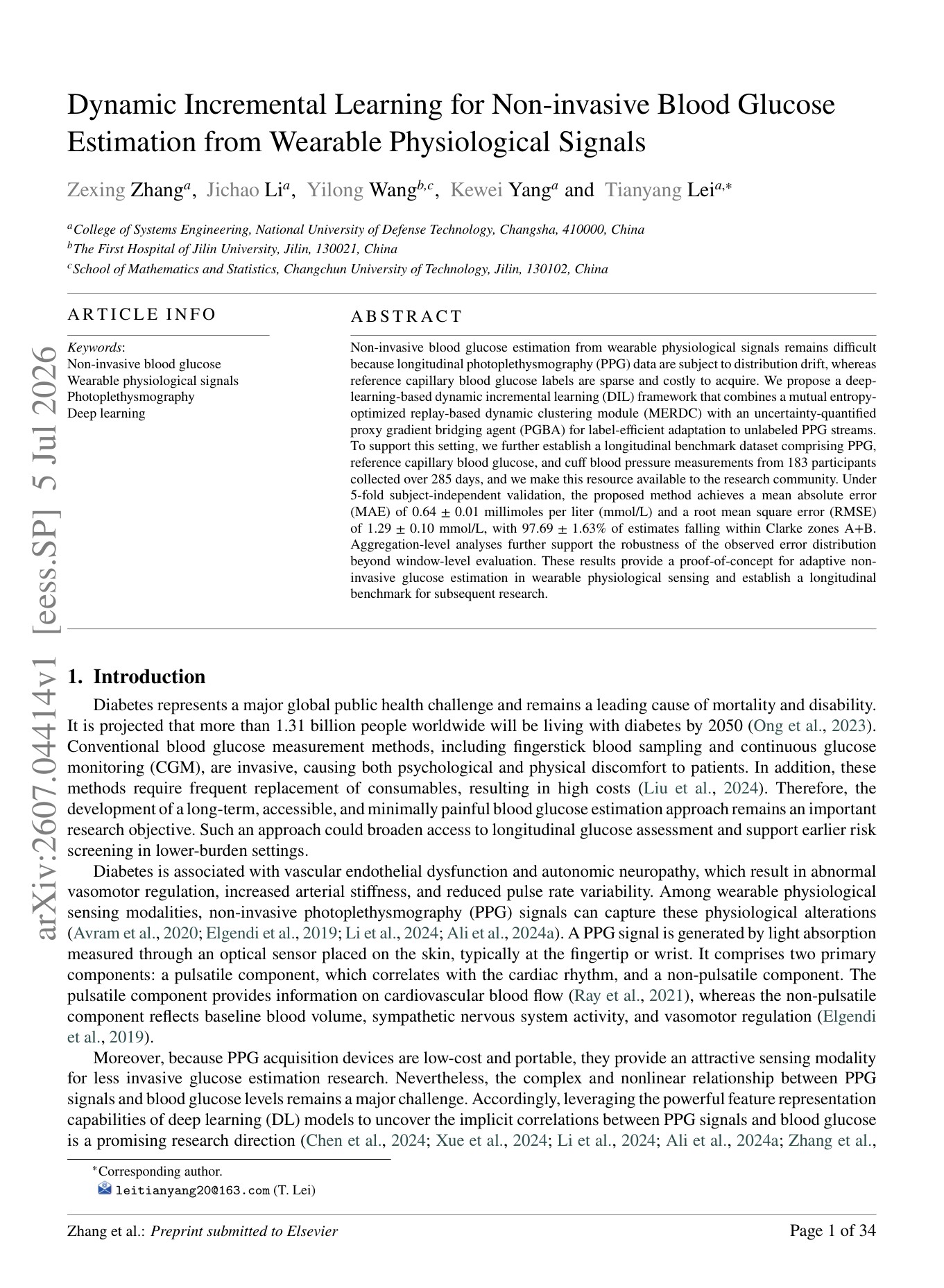
Replay-based dynamic learning and proxy gradients adapt to drifting wearable signals, reaching 0.64 mmol/L MAE in subject-independent validation.
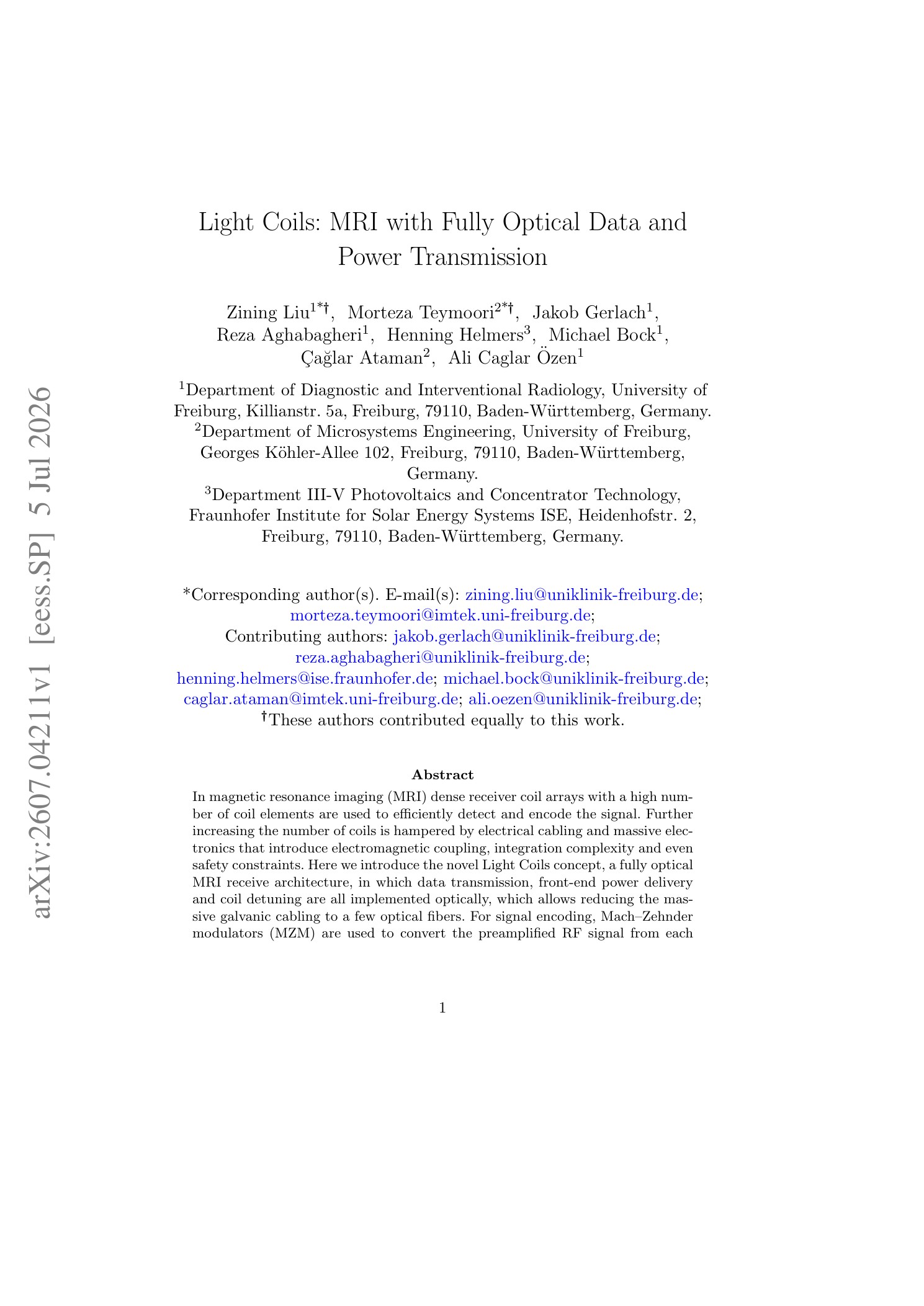
Mach-Zehnder readout and power-over-fiber match conventional 3T coil SNR with 5–10 mW modulator drive and fiber-only links.
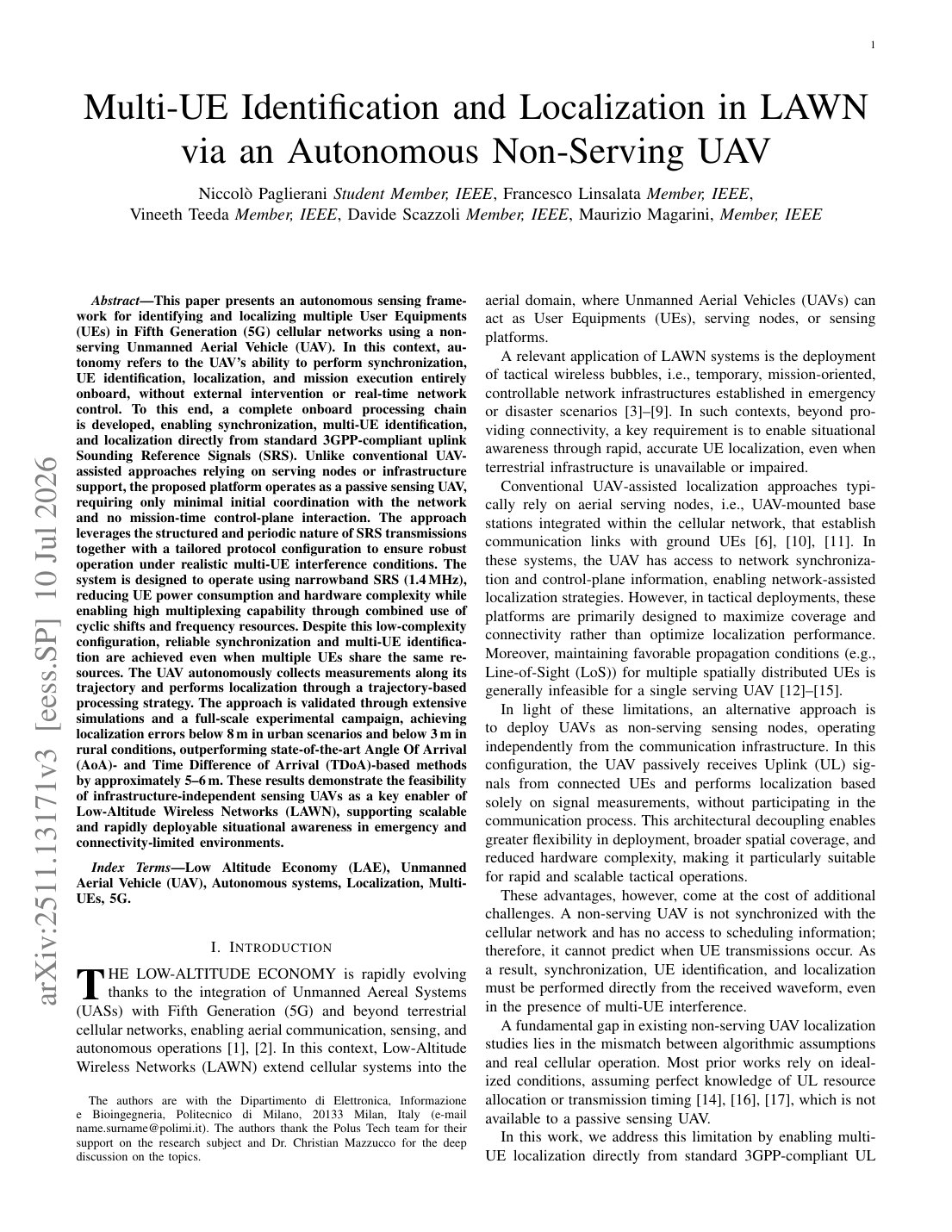
Standard uplink SRS signals feed onboard synchronization, UE identification, and trajectory-based localization, beating AoA and TDoA baselines by about 5–6 m.