Open Image Model Narrows Gap Under Tight Compute
Boogu-Image-0.1 combines a stronger multimodal encoder, agentic prompt rewriting, and curated data to train competitive generation and editing models for about $400K.
Underlying Paper
Boogu-Image-0.1: Boosting Open Agentic Multimodal Generation via Understanding under a Minimal Budget
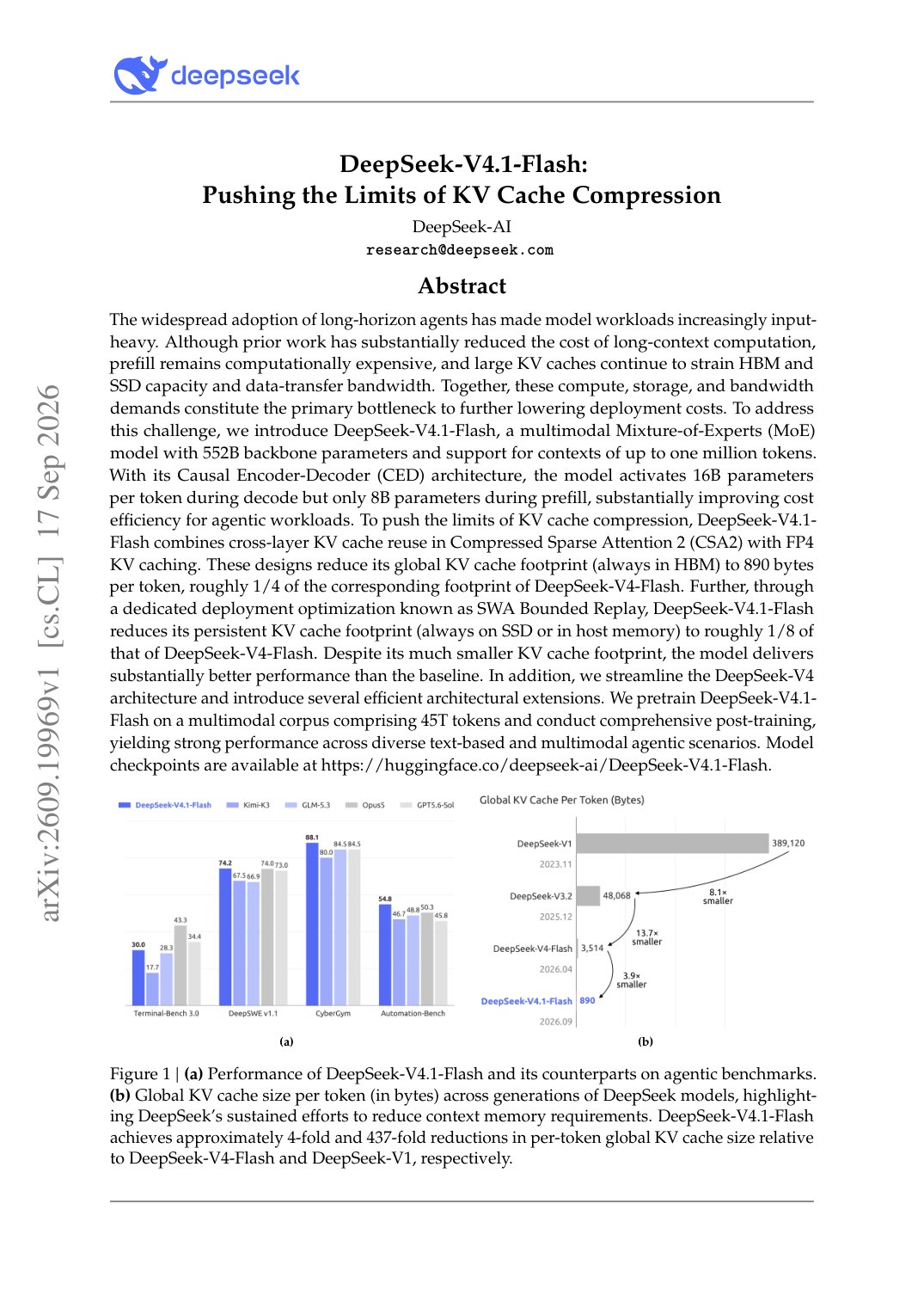
We introduce Boogu-Image-0.1, an open-source unified multimodal understanding and generation model family, comprising Base, Turbo, Edit, and Edit-Turbo variants. It delivers competitive performance in high-quality text-to-image generation, fast inference, instruction-based editing, and bilingual (Chinese-English) text rendering. Closed-source multimodal systems like Nano-Banana-Pro and GPT-Image-2 achieve strong performance through system-level integration rather than a single model, yet their internal practices remain largely undisclosed. In this work, we demonstrate that strengthening the understanding capability of the system, through a stronger multimodal encoder, agentic prompt rewriting, and related techniques, together with improvements in data quality, training pipelines, and agentic inference-time scaling, can substantially enhance generation and editing performance even under highly constrained compute budgets. Comprehensive evaluations show that Boogu-Image-0.1 consistently matches or surpasses other open-source models across standard benchmarks, and achieves results approaching leading closed-source systems. Notably, this is accomplished with only 208.62 million unique images. The base model's theoretical training cost is only approximately \$400K. We share practical discussions that we believe are valuable to the broader research community, and release weights, code, and recipes under Apache 2.0 to advance the open ecosystem for unified multimodal understanding and generation. Our code is available here: https://github.com/Boogu-Project/Boogu-Image.
Open image-generation systems are under pressure from two directions: closed systems are increasingly agentic, while open models are judged mostly by static text-to-image benchmarks that hide inference cost and system design. Boogu-Image-0.1 addresses that gap with an open unified model family for image generation, bilingual text rendering, and instruction-based editing. The paper’s central claim is practical rather than architectural maximalism: better understanding, cleaner data, and selective inference-time computation can move an open model closer to closed systems without frontier-scale training budgets.
Core Contribution
The genuinely useful part of Boogu-Image-0.1 is the way it treats generation as a requirement-following problem, not only a prompt-to-image mapping. The authors argue that the field is shifting from Text-to-Image toward Requirement-to-Image, where the model must interpret implicit constraints, style requirements, layout demands, and cross-modal context. Their answer is a family of variants — Base, Turbo, Edit, and Edit-Turbo — plus an agentic layer that rewrites prompts and routes requests to the cheaper or stronger variant depending on difficulty.
Figure 2 shows the intended operating range: photorealistic portraits, Chinese ink-and-gold painting, Chinese calligraphy, a 3D miniature scene, and clean English title rendering inside one released model family.
Technical Approach
Boogu-Image-0.1 builds on a diffusion-transformer-style image generator with a multimodal understanding stack around it. The appendix lists a DiT with 32 single-stream layers and 8 dual-stream layers, 3D RoPE, hidden size 3360, 28 attention heads, and 10,292.56M trainable parameters. With the optional prompt-tuning transformer, the total rises to 11,022.55M parameters. The system uses FLUX.1-dev as the VAE and Qwen3-VL-8B-Instruct as the instruction encoder.
The training pipeline is staged by resolution and task. The paper describes progressive training from low-resolution to higher-resolution images, followed by fine-tuning from text-to-image into text-and-image-to-image editing. For the T2I phase, the authors report roughly 22M samples: 11.29M pure T2I samples drawn from a 47.19M Boogu Syllabus dataset, plus 10.70M editing samples augmented from an initially constructed 2.50M T2I dataset. That sits inside the paper’s larger budget claim: 208.62M unique images and a theoretical base-model training cost of about $400K.
A second component is inference-time scaling. Instead of always running the most expensive variant, Boogu routes requests across the family. The paper explicitly notes that Base and Turbo outputs can be nearly indistinguishable in many cases while inference costs can differ by 50 to 100 times. This is a sensible engineering choice: spend latency on dense text, editing, or hard composition, but keep ordinary prompts on the faster path.
Results and Analysis
The evaluation mixes standard benchmark comparisons, Boogu Arena human comparisons, and many qualitative pages. The authors compare against open models such as Z-Image-Turbo and HiDream-O1-Image, and against closed systems including Qwen-Image variants, Seedream-5-Lite, Nano-Banana-Pro, and GPT-Image-2. The qualitative comparisons emphasize photorealistic and cinematic images, stylized art, and bilingual text rendering. The text-rendering pages are a useful signal because they stress character-level fidelity rather than only aesthetic preference.
The paper reports that Turbo handles short-to-medium text rendering up to about 100 Chinese characters or 100 English words, while Base is recommended for dense text over that range under 2K resolution. Figure 3 illustrates the paper’s strongest qualitative case: English and Chinese text rendered as posters, product images, signs, and layout-heavy designs rather than isolated words.
The evidence supports a narrower conclusion than the abstract’s broad comparison to leading closed systems. Boogu appears competitive among open models, especially when the task requires bilingual typography or instruction following, and the cost story is credible because the paper discloses model size, data scale, and training budget. The comparison to closed systems is less clean. The authors themselves point out that GPT-Image-2 can take up to 100 times longer than Z-Image-Turbo for a simple prompt, and that public leaderboards often omit inference-time cost. That makes a single quality ranking incomplete unless latency and test-time computation are fixed.
Limitations
The paper is unusually direct about its own limits. Boogu still trails leading closed systems on tasks requiring broad common-sense and domain knowledge, such as artistic styles, landmarks, public figures, and commercial products. Text rendering is optimized only for Chinese and English. Multi-person interactions, heavy occlusion, and unusual viewpoints can still distort hands and limbs. The use of the open FLUX.1 VAE also leaves reconstruction errors in fine details such as small faces, limbs, and text, with 2K generation only partly reducing the issue.
Evidence Box
moderateKey Claims
- •Unified open model family supports generation, editing, and bilingual text rendering
- •Stronger multimodal understanding improves requirement-following generation
- •Agentic routing reduces inference cost by selecting Base or Turbo per request
- •Curated data and staged training narrow the gap to stronger closed systems
Key Results
- •208.62M unique images used for full training pipeline
- •About $400K theoretical training cost for the base model
- •10,292.56M trainable parameters in the DiT model, or 11,022.55M with prompt tuning
- •Turbo supports text rendering up to 100 Chinese characters or 100 English words; Base recommended for denser text under 2K resolution
Limitations & Caveats
- •Closed-system comparisons are confounded by unreported inference-time cost and production safety filters
- •World knowledge still trails leading closed systems on styles, landmarks, public figures, and commercial products
- •Text rendering optimization is limited to Chinese and English
- •Multi-person scenes, occlusion, atypical viewpoints, and FLUX.1 VAE reconstruction errors can harm fine details