OmniDreams Runs Generative AV Simulation in Real Time
A Cosmos-derived causal diffusion model uses simulator state, action cues, and a streaming KV cache to render 704×1280 rollouts at 68–105 FPS.
Underlying Paper
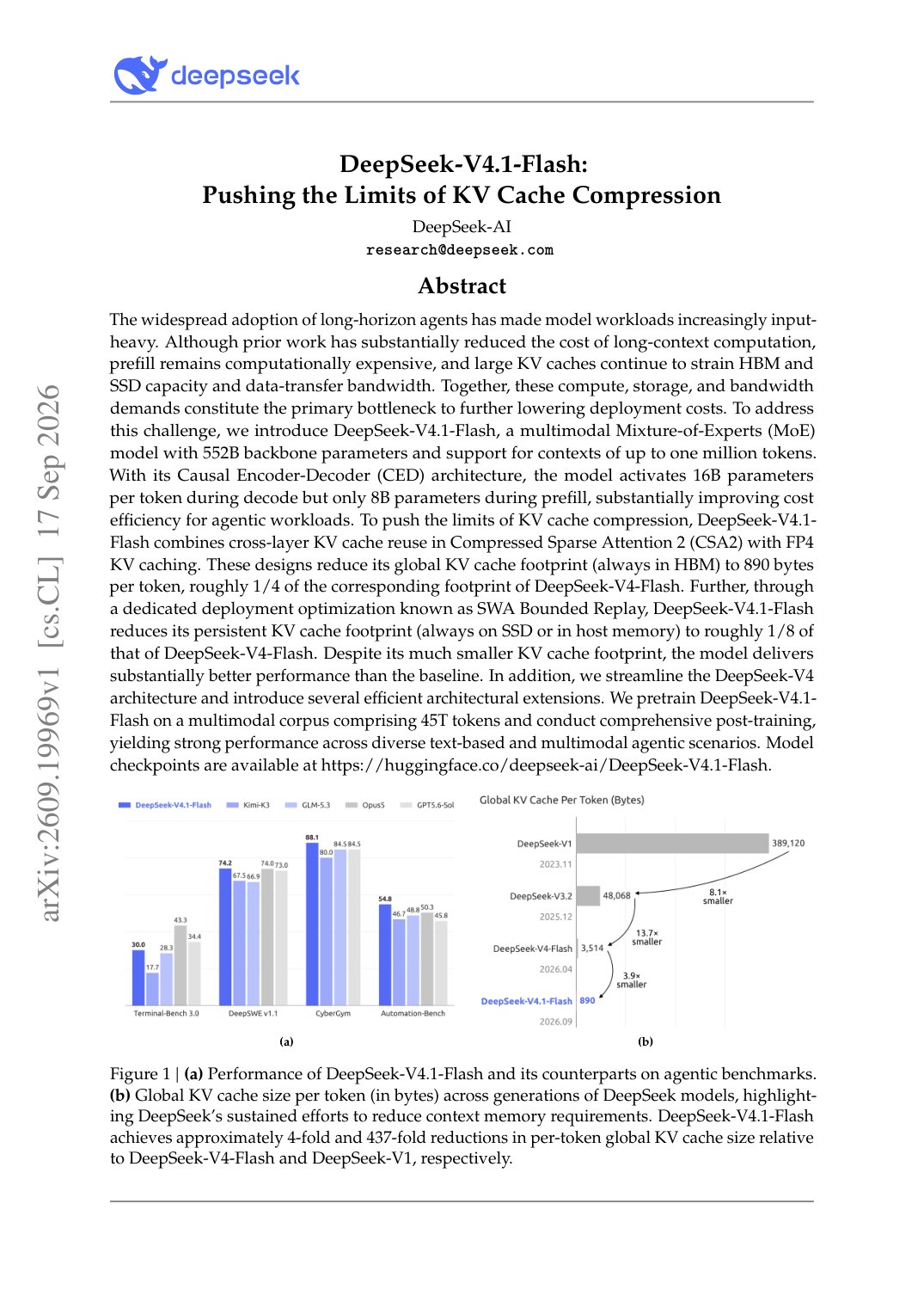
NVIDIA OmniDreams: Real-Time Generative World Model for Closed-Loop Autonomous Vehicle Simulation
As autonomous vehicle capabilities advance, the safe evaluation of driving policies in long-tail scenarios remains a critical bottleneck. In closed-loop simulation, the driving policy model actively interacts with the environment, where its actions dynamically update the simulator state and directly influence the next set of generated sensor observations. While recent reconstruction-based neural simulators offer photorealism, they are fundamentally constrained by their initial captured data and struggle to generalize to highly dynamic or novel scenes. To overcome these limitations, we introduce OmniDreams, a foundation generative world model mid- and post-trained from the Cosmos diffusion model to autoregressively generate action-conditioned videos in real time. By leveraging the rich visual priors of Cosmos and mid- and post-training on 21k hours of driving scenarios, OmniDreams synthesizes complex, unobserved phenomena that are hard for traditional simulators to capture, such as extreme weather and unpredictable dynamic agent behaviors. Crucially, it autoregressively conditions its photorealistic sensor generation on past frames, the current simulator state, and immediate driving actions. Deployed in a closed-loop system with the Alpamayo 1 policy model and AlpaSim orchestrator, OmniDreams acts as a highly responsive, reactive environment, providing a scalable and comprehensive solution for training and evaluating next-generation autonomous driving policies. We additionally show preliminary results indicating that a world-action model (WAM) post-trained from OmniDreams achieves strong performance on the Physical AI Autonomous Vehicles NuRec dataset, surpassing the VLA-based Alpamayo 1.5 research policy model while using only 1/5 the total parameters. These results highlight the potential for a real-time world model like OmniDreams to also serve as a backbone for policy architectures.
Closed-loop autonomous-vehicle evaluation has a specific bottleneck: the simulator must react to the policy, not merely replay a captured drive. Reconstruction-based neural simulators are strong when the vehicle stays near the logged camera path, but they are tied to what was captured and degrade under novel viewpoints, altered traffic, or unusual objects. NVIDIA’s OmniDreams paper argues for a different simulator core: an action-conditioned generative video model that takes the current simulator state and the policy’s trajectory, then produces the next camera observations fast enough to stay inside a closed loop.
Figure 1 shows the system-level contract: Alpamayo or a user sends actions into AlpaSim, AlpaSim updates the abstract world state, and OmniDreams returns synthesized frames to the policy.
Core Contribution
The main contribution is not only a driving video generator, but a real-time, stateful world-model server for AV simulation. OmniDreams is mid- and post-trained from Cosmos-Predict 2.5 on real driving data, then adapted to causal autoregressive generation so each rollout can condition on prior generated frames, the current abstract state, and the next policy action. The paper reports two variants: OmniDreams-SV, a single front-view model producing 8 RGB frames per step, and OmniDreams-MV, a multi-view model producing 16 RGB frames jointly across four synchronized cameras.
The engineering point is that policy evaluation needs both visual fidelity and responsiveness. A slow bidirectional video model can make good clips offline; it cannot serve as the camera renderer in a simulator where the policy changes the next state.
Technical Approach
OmniDreams conditions on three primary inputs: a text prompt for appearance attributes such as weather and lighting, an abstract world-scenario map containing HD-map geometry and dynamic-agent cuboids, and a history-frame cache. The first frame seeds the session. The structured state is encoded by a lightweight control branch rather than a separate heavy control network, and the tokens are injected into the DiT backbone through adaptive layer-norm modulation.
For multi-camera generation, the paper factorizes attention into temporal attention within each view and cross-view attention at each time step. This reduces the naive full joint-attention cost from across views and time to , where is the number of views and is the temporal chunk length. In practice, the reported production configuration uses four views, although the dataset has seven synchronized cameras.
Figure 5 captures the shift from bidirectional denoising to causal generation with a KV cache. That change is central: it lets the model reuse prior keys and values over a rollout instead of reprocessing the whole history every step.
Training proceeds in stages. The authors first adapt Cosmos-Predict 2.5 to AV data and multi-view generation, then add world-scenario control, then convert the model to causal autoregressive generation with Diffusion Forcing. A final distillation stage combines Self Forcing with Distribution Matching Distillation so the deployed model can run in a few denoising steps. The paper also uses a progressive long-context teacher to reduce temporal shift artifacts that appear when the rolling KV cache extends beyond the shorter context used during training.
Results and Analysis
The strongest evidence is the end-to-end latency result. On NVIDIA GB300 hardware at 704×1280, OmniDreams-SV generates an 8-frame single-view chunk in 118 ms on one GPU, corresponding to 68 effective FPS. OmniDreams-MV generates a 16-frame four-view chunk in 151 ms on a 16-GPU GB300 cabinet, reported as 105 effective FPS per camera. That is the result that makes the system plausible as a simulator renderer rather than an offline video model.
The quality results are mixed but useful. On 1,000 held-out RDS-HQ-1M clips, the final distilled model improves FVD to 24.8 versus 26.8 for the bidirectional AV-adapted model and 31.7 for the causal Diffusion Forcing model. It also improves vehicle detection and lane metrics: LET-AP reaches 0.400, lane F1 reaches 0.828, and lane category accuracy reaches 0.961. The LightTAE decoder improves latency but hurts quality: FVD worsens from 24.8 to 45.4, making the speed-quality trade-off explicit.
Long rollouts are where the training recipe matters. On 20-second rollouts split into four 5-second windows, the progressive long-context teacher lowers mean segmented FVD from 240.0 to 179.4 and reduces the final-minus-first-window FVD drift from 299.9 to 172.9 compared with the short-context teacher. This supports the authors’ claim that long-context distillation reduces accumulated artifacts, though the metric still shows quality degradation over time.
The closed-loop comparison is more indirect. On a 501-scene Physical AI Autonomous Vehicles NuRec subset, OmniDreams preserves the policy ranking observed under the NuRec renderer across multiple Alpamayo variants. For visual realism under larger closed-loop trajectory deviation, the paper reports an 82.2 FVD gap at 4+ meters: NuRec rises to 207, while OmniDreams stays near 125. The interpretation is narrow but meaningful: when policies move away from the recorded path, the generative renderer handles off-capture viewpoints more gracefully than reconstruction.
The paper also reports an exploratory policy result: an OmniDreams-derived world-action model reduces all incidents from 6.9% to 4.2% versus Alpamayo 1.5, while using roughly 2B parameters instead of about 10B. That is promising, but it is preliminary and evaluated inside NVIDIA’s own stack.
Figure 11 illustrates the qualitative long-tail case: an inserted uncommon object moves plausibly without an explicit cuboid trajectory, which is exactly the kind of scenario reconstruction systems cannot obtain from logged data alone.
Evidence Box
strongKey Claims
- •Causal generative video can serve as a closed-loop AV sensor renderer
- •Streaming KV-cache generation enables long interactive rollouts
- •World-scenario conditioning supports controllable long-tail simulation
- •OmniDreams representations can be reused for driving policy prediction
Key Results
- •68 effective FPS for 8-frame 704×1280 single-view chunks on 1 GB300 GPU
- •105 effective FPS per camera for 16-frame 704×1280 four-view chunks on 16 GB300 GPUs
- •FVD 24.8 for distilled OmniDreams-SV on 1,000 held-out clips (vs. 26.8 bidirectional and 31.7 causal)
- •All incidents 4.2% for OmniDreams WAM on NuRec subset (vs. 6.9% for Alpamayo 1.5)
Limitations & Caveats
- •Real-time multi-view deployment depends on high-end GB300 multi-GPU hardware
- •Chunked generation fixes policy and traffic trajectories for the duration of each generated chunk
- •Closed-loop evidence is evaluated inside NVIDIA’s AlpaSim and Alpamayo stack
- •Long-rollout FVD still drifts over 20 seconds despite progressive teacher training