Qwen-Audio-3.0-ASR Improves Entity Recall With Hierarchical Hotwords
An instruction-controlled MoE ASR model trained on tens of millions of hours reaches 99.43% recall for priority person names under hotword conditioning.
Underlying Paper
Qwen-Audio-3.0-ASR Technical Report
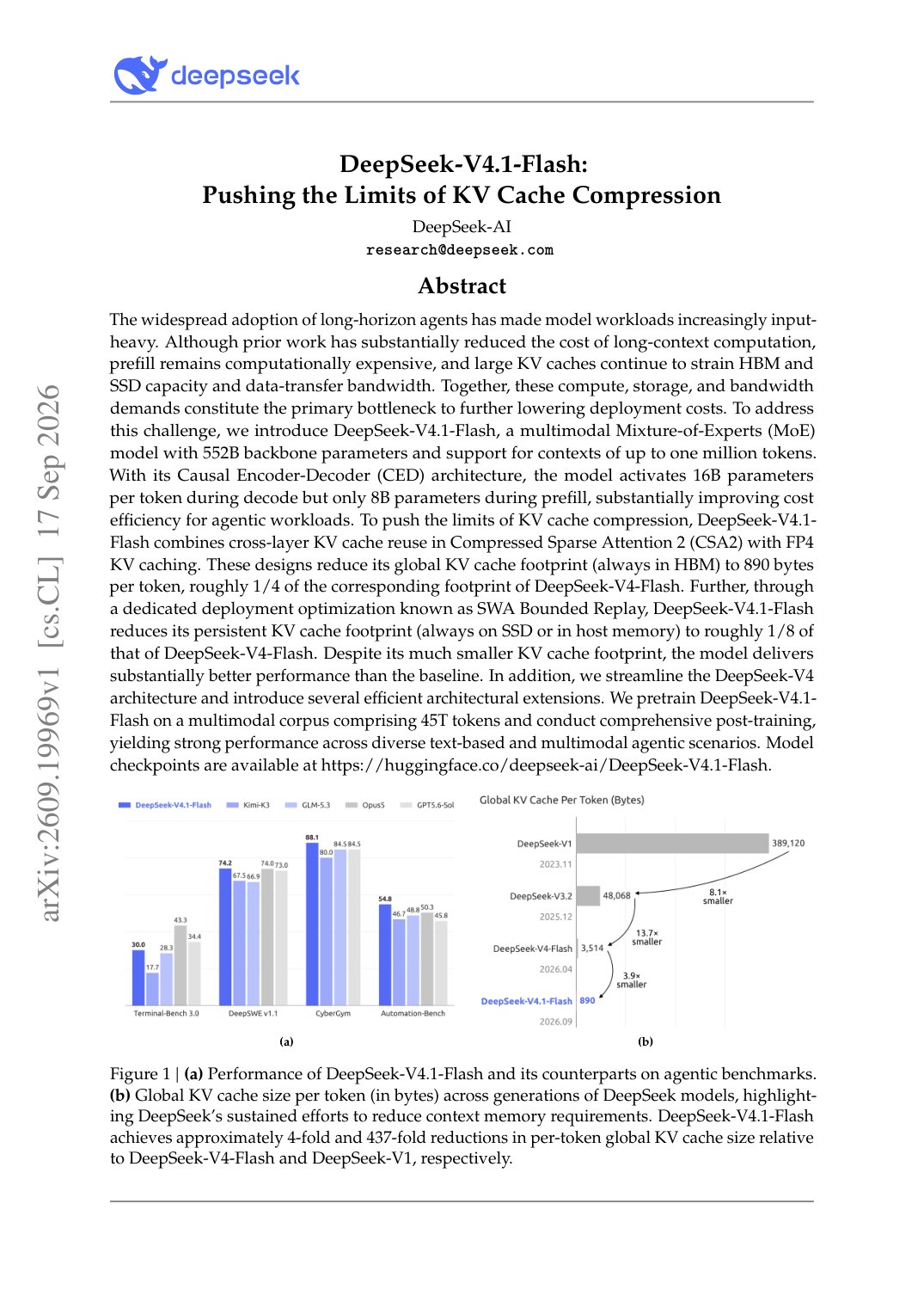
In recent years, automatic speech recognition (ASR) has witnessed transformative advancements driven by three complementary paradigms: data scaling, model scaling, and deep integration with large language models (LLMs). However, bridging the gap between academic benchmark performance and real-world production utility remains a persistent challenge, particularly in handling diverse regional dialects, dynamic entities and hotwords, long-range contextual information, and disfluent spontaneous speech. In this report, we present Qwen-Audio-3.0-ASR, a Mixture-of-Experts (MoE) LLM-based ASR system designed to address these production demands through a unified, instruction-following framework. The model is built upon the Qwen backbone, and is trained on tens of millions of hours of large-scale speech data. Qwen-Audio-3.0-ASR supports transcription across 30 languages and 16 Chinese dialectal varieties spanning eight major dialect regions. Beyond multilingual and dialectal recognition, the model provides production-oriented capabilities including industry-domain entity recognition, hierarchical hotword customization, native single-pass transcription polishing, and long-audio contextual modeling. We further develop a dedicated streaming variant, Qwen-Audio-3.0-ASR-Streaming, for latency-sensitive applications. Extensive evaluations on Chinese, English, multilingual, and real-world industrial test sets demonstrate state-of-the-art or highly competitive recognition performance across a broad range of evaluation conditions, with strong performance relative to leading commercial and proprietary systems including GPT-4o Transcribe and Gemini 3.1 Pro.
Speech recognizers can post low error rates on clean benchmarks while still failing on the details that determine whether a production transcript is usable: regional dialects, changing entities, conversation history, disfluencies, and streaming latency. Qwen-Audio-3.0-ASR addresses those cases with a Qwen-based mixture-of-experts system that treats transcription behavior as an instruction-controlled decoding task rather than a fixed acoustic-to-text pass. The report covers 30 languages and 16 Chinese dialectal varieties, alongside a streaming variant for latency-sensitive deployment.
Core Contribution
The central contribution is not a new benchmark score in isolation, but a collection of ASR controls placed inside one decoding framework: dialect-aware transcription, domain-entity recognition, two-tier hotwords, long-audio context, and optional native polishing. The authors argue that integrating these controls into the recognizer avoids the operational cost and error propagation of separate adaptation and rewriting stages.
Figure 1 organizes those production features around four system properties: instruction-controlled decoding, context awareness, single-pass generation, and low latency.
The most concrete addition is hierarchical hotword conditioning. Retrieved candidates are split into a high-priority set, P0, and a broader P1 set, with P0 assigned greater conditioning weight. That division is intended to make an explicitly supplied critical term more likely to survive decoding without discarding useful lower-confidence candidates.
Technical Approach
The report describes a Qwen-backbone MoE model trained on tens of millions of hours of speech. Its audio encoder is paired with text instructions so that output mode can be specified at inference time. The same recognition pass can emit either a raw transcript or a polished transcript; the latter removes fillers and stutter-like repetitions, resolves self-corrections toward the speaker's final wording, and normalizes punctuation and formatting.
Long-audio context is handled by conditioning a current audio segment on recently recognized text from the same session. The examples show why this differs from frame-local acoustic decoding: a prior mention can disambiguate a technical filename, a repeated abbreviation, or a person's name when the current audio alone supports a plausible but incorrect homophone. This is useful for meetings, messages, and call transcripts, where local acoustics often do not contain enough evidence.
The streaming workflow retains configurable right context and refreshes the displayed hypothesis at utterance end using all available context. Figure 5 makes the deployment trade-off explicit: partial transcripts are produced incrementally, while longer context can improve the finalized text.
Results and Analysis
On the multilingual public benchmarks in Table 2, Qwen-Audio-3.0-ASR reports the lowest macro average among the listed systems on GigaSpeechBench and Common Voice 15: 22.50 versus 22.76 for Doubao-ASR on GigaSpeechBench, and 4.57 versus 5.01 for Azure on Common Voice 15. The comparison is less uniform on FLEURS, where its 4.94 macro average trails GPT-4o Transcribe at 3.95. That mixed result matters: the system is competitive across several public multilingual sets, but the report does not establish a universal lead over every commercial baseline.
The production-oriented tests are more favorable. Across 15 internal industry domains, Figure 8 reports the highest entity recall for Qwen-Audio-3.0-ASR in every displayed domain. In Table 3, hotword conditioning raises recall for P0 person names from 62.12% to 99.43%, for P0 subject terms from 69.36% to 99.42%, and for P0 trending buzzwords from 63.08% to 99.46%. The result supports the narrower claim that high-priority supplied entities can be recovered reliably under this evaluation setup; it does not by itself show how well retrieval finds those candidates in an unconstrained application.
Native polishing improves the report's internal readability score from 2.53 to 3.44 on a 1–5 scale, while retaining a 3.44 faithfulness score. Its faithfulness is close to the 3.47 reported for a Qwen3.6-Plus cascade, but requires one inference pass rather than two. That is a credible systems advantage when end-of-utterance latency and pipeline simplicity matter, although the rating scale and evaluators are not independently described in the shown results.
Evidence Box
moderateKey Claims
- •Instruction-controlled ASR unifies transcription, polishing, context, and hotword behavior
- •Hierarchical P0/P1 hotwords improve recognition of high-priority long-tail entities
- •Long-audio context resolves errors that local acoustic decoding cannot disambiguate
- •Single-pass native polishing reduces the need for a separate LLM rewrite stage
Key Results
- •99.43% P0 person-name recall with hotwords, versus 62.12% without
- •99.42% P0 subject-term recall with hotwords, versus 69.36% without
- •4.57 Common Voice 15 macro average, versus 5.01 for Azure
- •Native polishing readability 3.44/5, versus 2.53/5 for raw transcripts
Limitations & Caveats
- •Industry entity evaluation is internal despite spanning 15 domains
- •Dialect consistency uses Qwen3.7-Max scoring with a consistency threshold of 6/10
- •Long-context evidence is presented as representative corrections rather than an aggregate error metric
- •FLEURS macro average is 4.94, behind GPT-4o Transcribe at 3.95