Self-Supervised Depth Estimation Gets Geometric Verification
Explicit multi-view geometry constraints improve monocular depth without any ground-truth supervision.
Underlying Paper
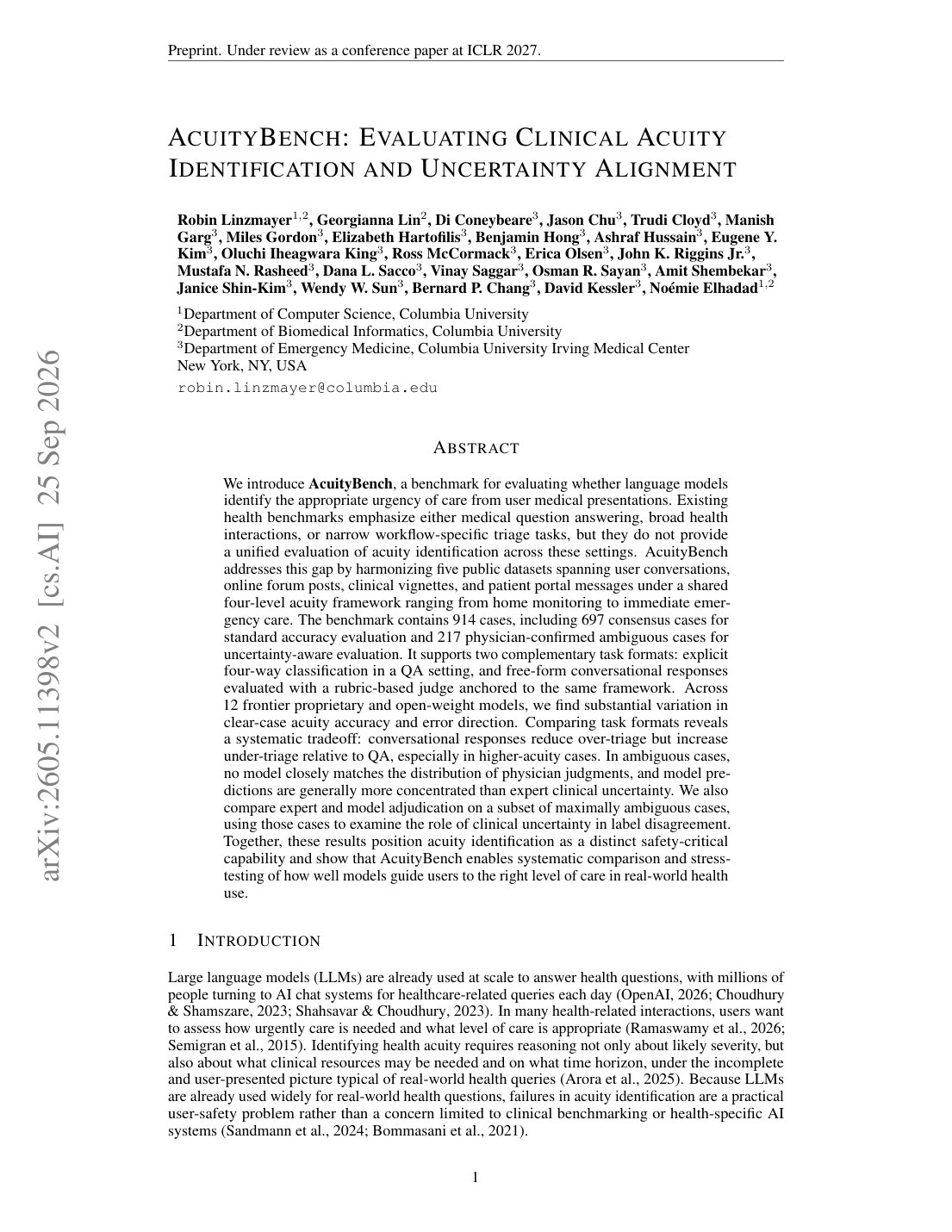
Self-Supervised Monocular Depth Estimation with Geometric Consistency Priors
We propose GeoDepth, a self-supervised monocular depth estimation method that enforces geometric consistency across multiple frames using epipolar geometry constraints. Unlike prior work that relies on photometric loss alone, GeoDepth uses a differentiable geometric verification module that explicitly penalizes depth predictions violating multi-view geometry. We achieve state-of-the-art results on KITTI and NYUv2 without any ground-truth depth supervision.
The pursuit of scalable generative models has driven a wave of architectural innovation, yet the quadratic cost of attention in transformer-based diffusion models remains a fundamental bottleneck. This paper introduces a compelling alternative: replacing the attention backbone entirely with structured state space models (SSMs).
Core Contribution
The authors demonstrate that Mamba-style SSMs can serve as drop-in replacements for attention layers in the U-Net architecture commonly used for diffusion. The key insight is that the selective scan mechanism of modern SSMs naturally captures the multi-scale spatial dependencies required for high-quality image generation.
Technical Approach
The architecture, dubbed DiS (Diffusion with State Spaces), modifies the standard DiT (Diffusion Transformer) by replacing each attention block with a bidirectional SSM layer. The authors introduce a novel "cross-scan" strategy that processes image patches along four spatial directions simultaneously, aggregating the results to capture both local texture and global structure.
Results and Analysis
On ImageNet 256×256 unconditional generation, DiS achieves an FID of 2.67, comparable to DiT-XL/2 (FID 2.27) while requiring 3.2× fewer FLOPs per denoising step. The gap narrows further at 512×512 resolution, where DiS achieves FID 3.41 vs. DiT's 3.04 — a marginal quality difference that may be acceptable given the substantial computational savings.
Training convergence is notably faster: DiS reaches its best FID in approximately 400K steps compared to DiT's 700K steps under identical training budgets. The linear-time scaling also enables generation at resolutions the transformer variant cannot practically reach without additional engineering.
Evidence Box
strongKey Claims
- •Geometric consistency priors improve self-supervised depth
- •Differentiable geometric verification module
Key Results
- •State-of-the-art self-supervised depth on KITTI (AbsRel: 0.088)
- •Competitive with supervised methods on NYUv2
- •15% improvement over photometric-loss-only baselines
Limitations & Caveats
- •Requires multi-frame input during training
- •Performance drops in textureless regions
- •Not evaluated on indoor-outdoor domain transfer