Proof Establishes Iwaniec’s Exact Beurling–Ahlfors Norm Conjecture
A quasiconvexity proof for a piecewise matrix integrand yields the exact $L^p$ operator norm: $p-1$ above $p=2$ and its reciprocal below.
Underlying Paper
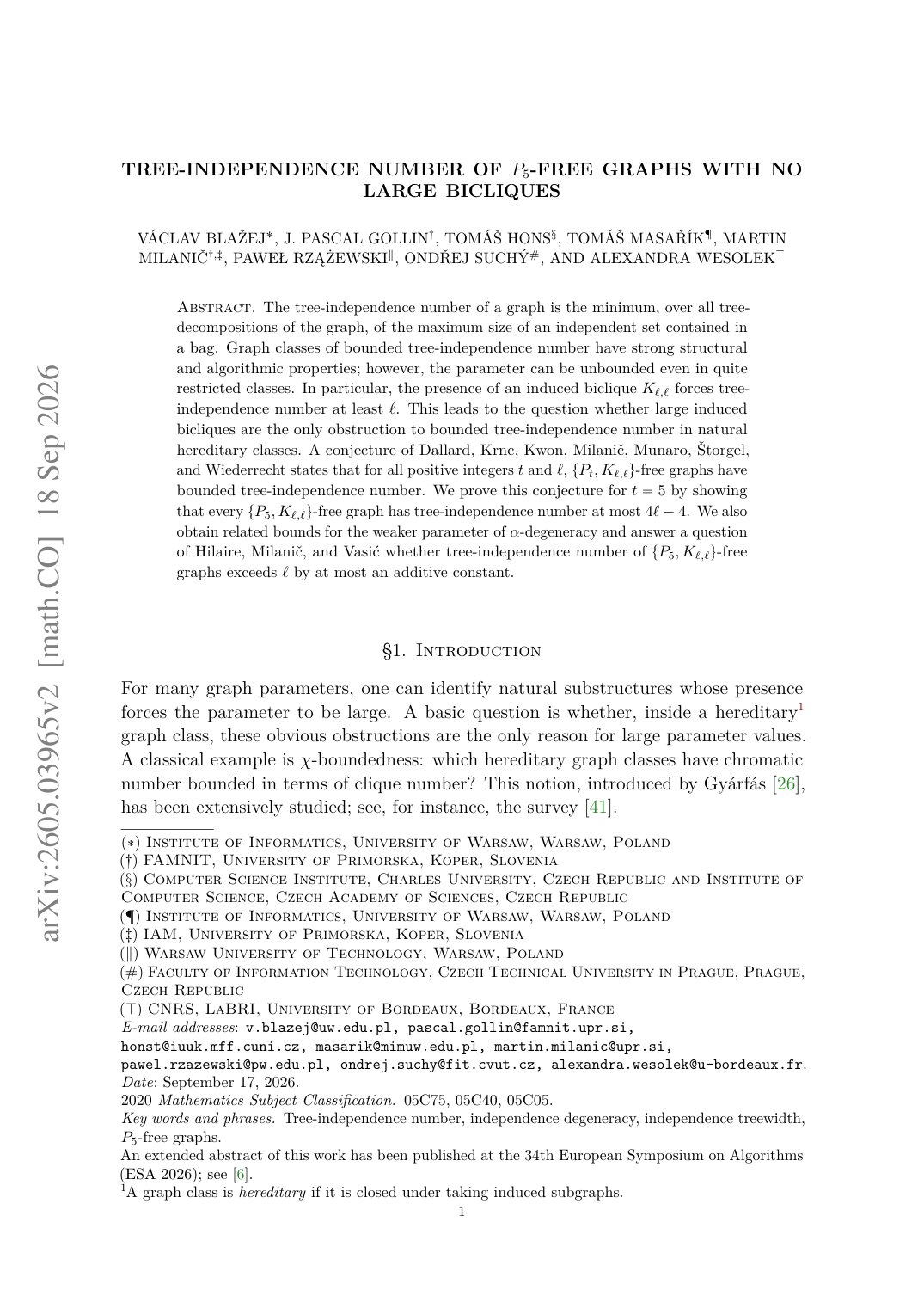
Sharp Higher Integrability Theory, Part I: The $L^p$-norm of the Beurling--Ahlfors transform
We confirm a conjecture posed by T. Iwaniec in 1982: the $L^p$ norm of the Beurling--Ahlfors transform is $p-1$ if $p\geq 2$, and $(p-1)^{-1}$ if $1
The Beurling–Ahlfors transform is a central singular integral in planar quasiconformal geometry, and its exact norm has resisted proof since Tadeusz Iwaniec posed the conjecture in 1982. The lower bound was already known; the unresolved part was the matching upper bound. This seven-page preliminary paper claims to settle that gap by proving a quasiconvexity inequality for a carefully chosen integrand on matrices.
The payoff is exact rather than asymptotic. For , the paper states that the norm of the transform on is , where . Thus the answer is for and for . The result would fix the sharp constant governing a long-standing analytic estimate and, through established connections, sharpen higher-integrability results for quasiconformal maps.
Core Contribution
The authors reduce the norm problem to quasiconvexity of the integrand
where a real-linear map is represented in complex notation as . Their Theorem 1 says that, on the unit torus , adding any smooth periodic perturbation cannot lower the integral of :
That is the paper’s genuinely new mathematical step. Earlier work had established related quasiconvexity inequalities under sign restrictions and lower-semicontinuity results, but not the unrestricted inequality needed for the Burkholder integrand. The authors then invoke the established argument connecting this quasiconvexity statement to the sharp estimate.
Technical Approach
The proof rewrites as a supremum of simpler functions. With the rows of and the quarter-turn matrix, it defines
The remaining regime is handled through Lemma 4. Given a periodic map whose first row is constrained by the closed unit disk, the authors take an projection onto the set of admissible constrained fields. The projected map has gradient either equal to the original gradient or on the disk boundary almost everywhere, and it satisfies a variational inequality. Combining this projection property with the null-Lagrangian identity for the determinant converts the pointwise support-function bound into the desired integral lower bound. The method is variational rather than complex-analytic, which is why the authors present it as a route that can extend beyond the planar setting.
Results and Analysis
The stated corollary gives the exact constant for every : on and on . There is no numerical experiment or approximation here; the evidence is a formal proof built from Theorem 1, the projection lemma, and the previously developed implication from Burkholder-integrand quasiconvexity to the transform bound.
For analysts, the important distinction is that this is not merely another upper estimate. It matches the classical lower bound exactly. The proof’s formulation in real matrices also avoids dependence on a specifically complex-analytic construction, and the introduction identifies possible future applications to higher-dimensional Beurling–Ahlfors-type operators, even-dimensional quasiconformal mappings, elliptic PDEs, and Monge–Ampère-related variational problems. Those extensions are motivations, not results established in Part I.
Scope and Caveats
The manuscript labels itself preliminary and supplies a concise proof rather than a full independent redevelopment of every implication behind Corollary 2; the passage from Theorem 1 to the operator norm explicitly relies on earlier arguments. Its higher-dimensional consequences remain prospective. It also includes an unusual disclosure that its key ideas were generated by “ChatGPT 6.0 Astra” without substantial human assistance, while attributing the proof’s ownership to the listed mathematical community. That statement is part of the manuscript’s account of provenance, not mathematical evidence. The evidence for the central claim rests on whether the short quasiconvexity proof and its cited bridge withstand specialist scrutiny.
Evidence Box
theoreticalKey Claims
- •The Beurling–Ahlfors transform has exact Lp norm p*−1
- •The piecewise integrand L is quasiconvex on 2×2 matrices
- •The variational argument can inform higher-integrability theory beyond the plane
Key Results
- •Exact norm p−1 for every 2≤p<∞
- •Exact norm (p−1)⁻¹ for every 1<p≤2
- •Theorem 1 proves the integral inequality on Q=R²/Z² for all A∈R²×²
- •The proof treats all 1<p<∞ through p*=max{p,p/(p−1)}
Limitations & Caveats
- •Seven-page manuscript explicitly marked preliminary
- •Norm corollary invokes prior arguments rather than reproving the full bridge
- •No higher-dimensional operator theorem is proved in Part I
- •No empirical or computational validation applies to this theoretical result