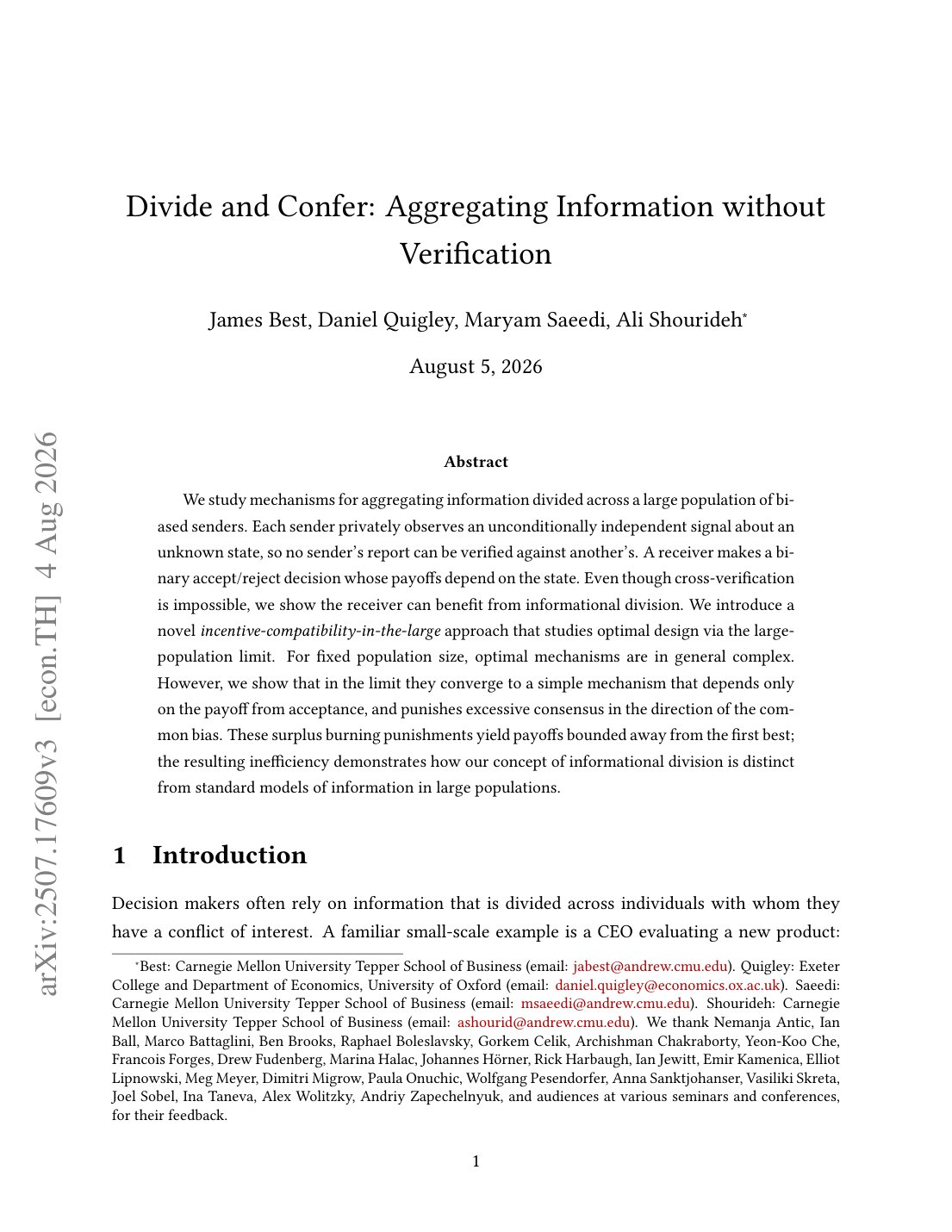
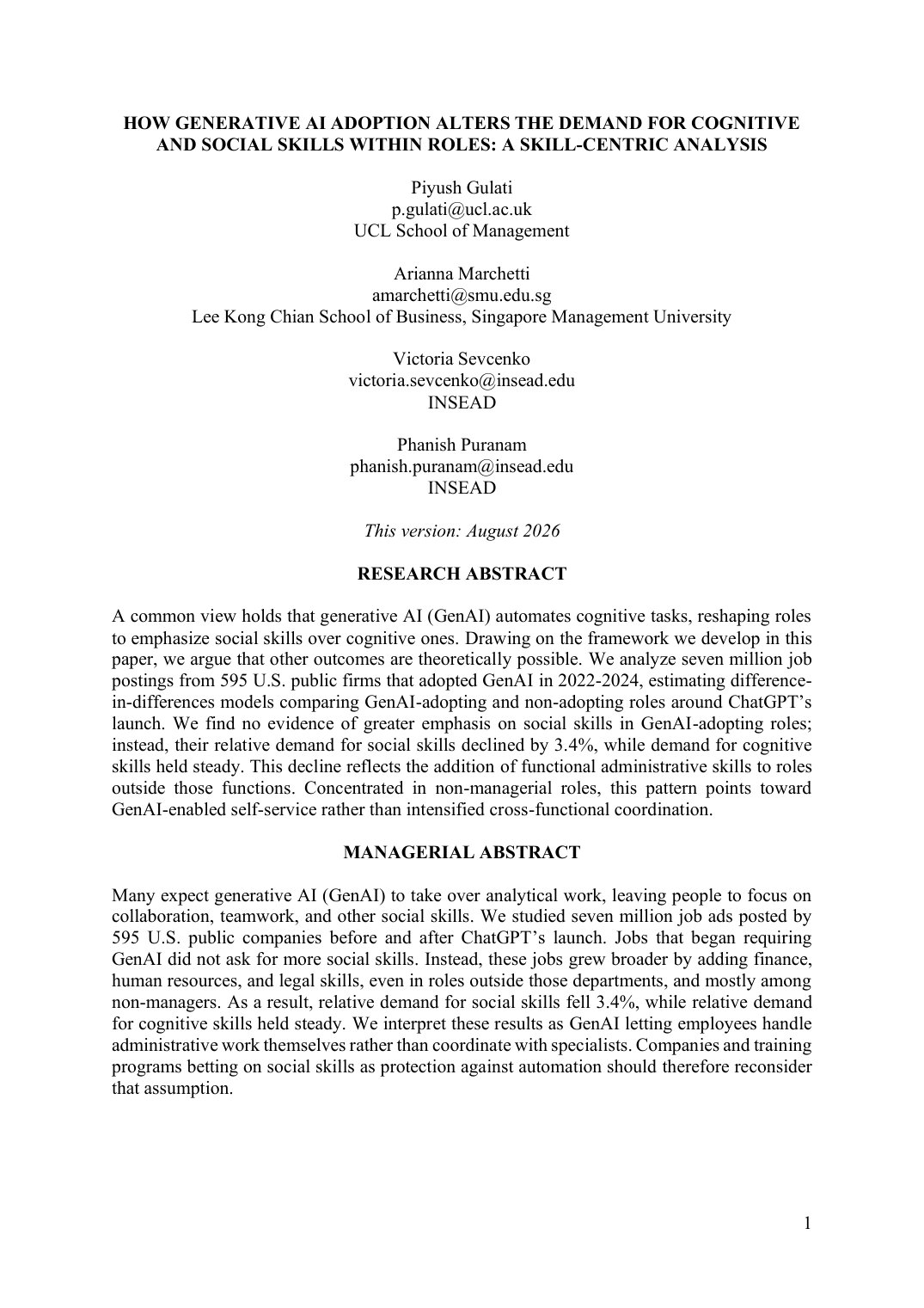
Interim Reviews Create Incentives Beyond Terminal Pay
A dynamic contracting model turns future assignments and career opportunities into performance-contingent rewards when cash compensation cannot do the job alone.
Underlying Paper
Midterm Review
We study why organizations conduct interim performance reviews when monetary rewards are limited. An interim review creates incentive capacity by allowing future work and career opportunities to serve as rewards for past performance. Optimal review policies map a continuum of performance outcomes into a simple incentive ladder: termination, tough or easy continuation, and, for exceptional performance, an early maximal reward with no further work. Review can even sustain high effort when terminal compensation alone cannot. Its timing balances two forces: waiting improves the information revealed by performance, but leaves less future work available to motivate the agent.
Annual evaluation is often treated as an administrative ritual, but it can be a poor incentive instrument when an organization cannot make large terminal payments. The paper asks what an interim review adds in that setting. Its answer is that a review creates usable incentive capacity: performance observed before the relationship ends can determine whether the agent receives more work, a demanding continuation path, an easier one, or an early maximal reward.
The contribution is theoretical rather than empirical. The authors study an organization that observes a continuum of interim performance outcomes and chooses both how to map those outcomes into continuation arrangements and when to conduct the review. The central trade-off is clean: delaying review reveals more about performance, while reviewing earlier preserves more future work that can be used to motivate current effort.
Core Contribution
The paper’s main result is that an optimal review policy is much simpler than the underlying continuum of performance signals. Rather than assigning a distinct continuation contract to every realization, it organizes outcomes into an incentive ladder. Poor performance leads to termination; intermediate outcomes lead to either tough or easy continuation; exceptional performance receives an early maximal reward and no additional work.
That last region is an important detail. A high performer is not merely promised a better future assignment. At sufficiently strong performance, the organization exhausts the available reward immediately by ending future work. This makes the review a device for reallocating continuation value across performance states, not just a checkpoint for deciding whether to retain someone.
The paper also argues that this structure can sustain high effort even when terminal compensation alone cannot. In the model, future work and career opportunities are valuable to the agent, so the organization can condition access to them on observed interim performance. The result identifies a channel that standard end-of-horizon bonus schemes do not have: incentives can be supplied through the timing and character of the remaining relationship.
Technical Approach
The authors frame the problem as a dynamic incentive-design exercise with limited monetary rewards. A review date partitions the relationship into a pre-review period, in which the agent chooses effort, and a post-review period, in which the organization can allocate continuation opportunities. The review outcome is informative about prior performance, but its usefulness depends on how much of the relationship remains after the signal arrives.
The optimal policy therefore combines an information problem with a continuation-value problem. Waiting makes the performance signal more informative, improving the organization’s ability to distinguish outcomes. But waiting also shrinks the stock of future work that can be allocated as an incentive. Reviewing too late can leave the organization with accurate information but little remaining capacity to reward it.
The four-region ladder is the paper’s compression result. It converts a potentially complicated mapping from a continuum of signals into a small number of operationally recognizable actions. Termination handles low outcomes. Tough and easy continuation distinguish intermediate outcomes through the nature of future work. The early maximal-reward region handles performance high enough that further work is no longer needed to provide incentives.
Results and Analysis
The evidence consists of formal characterization and comparative logic, not a field dataset, laboratory experiment, or calibrated organizational case. Within that scope, the result is persuasive because the mechanism follows directly from the resource the model adds: future work is both productive and valuable to the agent. An interim review matters precisely because it makes that resource contingent on performance before the relationship ends.
The timing result is more informative than a generic recommendation to review frequently. The authors do not claim that earlier is always better. Earlier reviews retain more incentive capacity but rely on less informative performance evidence; later reviews improve sorting but weaken the ability to use future opportunities as rewards. The optimal timing balances these opposing forces.
For practitioners, the implication is conditional rather than universal. Interim reviews should be most useful where organizations face real limits on monetary rewards and can credibly vary post-review assignments, advancement, or continued employment. The theory is less directly applicable where future work has little value to the worker, where assignments cannot be differentiated, or where legal and organizational constraints prevent performance-contingent continuation decisions. The paper supplies a mechanism and a policy shape; it does not establish the size of the effect in any particular workplace.
Limits of the Evidence
No empirical estimates establish how often organizations use the predicted ladder or whether it raises effort outside the model. The model also abstracts the rich institutional features of review systems, including multiple review rounds, team production, biased evaluations, and constraints on reassignment. Those omissions do not undermine the formal result, but they limit any claim that the prescribed timing or four-region policy should transfer unchanged into practice.
Evidence Box
theoreticalKey Claims
- •Interim reviews create incentive capacity through future work and career opportunities
- •Optimal policies compress continuous performance into an incentive ladder
- •High effort can be sustained when terminal compensation is insufficient
Key Results
- •Four performance regions: termination, tough continuation, easy continuation, and early maximal reward
- •One interim review balances 2 forces: signal informativeness from waiting and remaining future-work incentives
- •Exceptional performance receives an early maximal reward with 0 further work
Limitations & Caveats
- •No empirical or field evaluation of organizational outcomes
- •Single interim-review framework rather than repeated review cycles
- •Abstracts from team production, evaluator bias, and reassignment constraints